
America's three-branch government system wasn't created by accident. The founders, wary of concentrated power after breaking from British monarchy, deliberately designed a government where power is divided and balanced among legislative, executive, and judicial branches-a revolutionary concept that has sustained American democracy for over 200 years.
When America's founding fathers gathered to create a new government in 1787, they faced an unprecedented challenge: how to establish a system that would be powerful enough to govern effectively, yet carefully constrained to prevent tyranny. Their ingenious solution-dividing power among three distinct branches-has become one of the most enduring and influential governmental structures in world history.
This tripartite system wasn't created arbitrarily. It emerged from careful study of political philosophy, historical precedents, and the founders' own experiences with both monarchy and the flawed Articles of Confederation. Today, the three branches continue to provide the framework for American democracy, though they face modern challenges that the founders could never have imagined.
Historical Origins and Founding Fears
The U.S. government's structure was born from deep skepticism about concentrated power. Having just fought a revolution against King George III, the founders were determined to prevent any single person or faction from dominating the new nation. Their solution drew heavily from Enlightenment thinkers, particularly Baron de Montesquieu, who advocated separating governmental powers to preserve liberty.
James Madison, often called the "Father of the Constitution," articulated these concerns in Federalist Paper No. 47, writing that "the accumulation of all powers, legislative, executive, and judiciary, in the same hands... may justly be pronounced the very definition of tyranny."

The failure of America's first governmental framework-the Articles of Confederation-also shaped the founders' thinking. That system created a weak central government that couldn't effectively address national problems. The Constitutional Convention of 1787 sought to strengthen federal authority while still preventing its abuse.
Separation of Powers Explained
The Constitution establishes three distinct branches, each with unique powers:
- The Legislative Branch (Congress) makes laws
- The Executive Branch (President) enforces laws
- The Judicial Branch (Supreme Court and federal courts) interprets laws
This separation ensures that no single entity can control the entire governing process. Each branch has its own constitutional authority, operates independently, and draws power from different sources. Congress represents the people through elected representatives, the President serves as a nationally elected leader, and federal judges receive lifetime appointments to insulate them from political pressure.
As Madison explained in Federalist No. 51: "Ambition must be made to counteract ambition." By giving each branch different ambitions and interests, the founders created a system where power naturally restrains power.
Checks and Balances System
Merely separating powers wasn't enough. The Constitution creates a complex web of checks and balances where each branch has tools to limit potential overreach by the others:
- Congress passes laws but faces potential presidential vetoes
- The President can veto legislation but Congress can override with a two-thirds majority
- Congress confirms presidential appointments and can impeach officials
- The President appoints federal judges, but only with Senate confirmation
- Courts can declare laws unconstitutional through judicial review
- Congress determines the size and jurisdiction of federal courts
This system intentionally creates friction. As Justice Louis Brandeis later observed, "The doctrine of the separation of powers was adopted not to promote efficiency but to preclude the exercise of arbitrary power." The resulting governance may sometimes be slow and complicated, but it helps prevent hasty actions and power abuses.
Legislative Branch: Powers and Responsibilities
Congress-comprising the House of Representatives and Senate-holds the lawmaking power. Article I of the Constitution (the longest article, reflecting the founders' view of legislative primacy) grants Congress specific authorities including:
- Passing federal legislation
- Declaring war
- Establishing federal courts
- Imposing taxes and tariffs
- Regulating commerce
- Overseeing the federal budget
The bicameral structure itself represents a compromise and check, as the House represents states by population while the Senate gives each state equal representation regardless of size. This forces legislation to satisfy both majority will and state interests.
Congress also has significant oversight powers, investigating executive actions through committees and controlling government funding through the "power of the purse"-perhaps its most potent check on other branches.
Executive Branch: Powers and Responsibilities
The President leads the executive branch as both head of state and head of government. Article II grants the President authority to:
- Serve as Commander-in-Chief of the armed forces
- Implement and enforce laws passed by Congress
- Conduct foreign policy and negotiate treaties
- Appoint federal officials and judges
- Grant pardons and reprieves
- Deliver the State of the Union address
Though the founders envisioned a relatively constrained executive, presidential power has grown substantially over time, particularly during crises like wars and economic depressions. Modern presidents wield significant authority through executive orders, administrative regulations, and control of the federal bureaucracy.
The presidency is unique in being the only office elected by the entire nation (albeit indirectly through the Electoral College), giving presidents a platform to set national priorities and appeal directly to citizens.
Judicial Branch: Powers and Responsibilities
The federal judiciary-headed by the Supreme Court-is the most structurally insulated branch, with judges appointed for life to ensure independence. Article III establishes the judiciary's core responsibility: resolving legal disputes and interpreting laws.
Interestingly, the Constitution doesn't explicitly grant courts the power of judicial review-the authority to invalidate laws that conflict with the Constitution. This critical check emerged from the 1803 case Marbury v. Madison, when Chief Justice John Marshall established the principle that "it is emphatically the province and duty of the judicial department to say what the law is."

The judiciary serves as the ultimate interpreter of constitutional meaning, though it lacks enforcement mechanisms and relies on the other branches to respect its decisions. This limitation prompted Andrew Jackson's famous (though possibly apocryphal) retort to a ruling he opposed: "John Marshall has made his decision; now let him enforce it."
Modern Challenges to the System
The three-branch system has proven remarkably durable, but faces several contemporary challenges:
The rise of administrative agencies has created what some call a "fourth branch" of government. These bodies often combine aspects of all three traditional branches-creating regulations (legislative), enforcing them (executive), and adjudicating disputes (judicial).
Partisan polarization threatens the system when loyalty to party outweighs institutional interests. The founders assumed branches would jealously guard their powers regardless of party, but today's hyperpartisanship sometimes undermines these institutional incentives.
The growth of presidential power, especially in national security and foreign affairs, has tilted the balance toward the executive branch. War powers have been particularly contentious, as formal congressional declarations of war have been replaced by broader authorizations and executive initiatives.
Judicial confirmation battles have become increasingly political, potentially undermining the perceived independence of courts. As lifetime appointments give judges enormous influence, the selection process has become a partisan flashpoint.
Global Influence of the Three-Branch Model
The American three-branch system has profoundly influenced democratic governance worldwide. After World War II, the United States helped shape new constitutions in countries like Japan and Germany, incorporating separation of powers principles.
Many newer democracies have adapted the model to their own contexts, sometimes blending it with parliamentary features. The fundamental idea of divided, balanced power has become a cornerstone of democratic theory globally.
Even critics of specific American governmental features often embrace the broader principle that concentrated power threatens liberty. The three-branch structure, despite its flaws and challenges, continues to exemplify the founders' core insight: that democratic government requires not just popular sovereignty, but also carefully designed institutions that check human ambition and prevent tyranny.
Frequently Asked Questions About The Genius of America's Three Branches: How Checks and Balances Keep Democracy Alive
Why didn't the founders create a parliamentary system instead of three branches?
The founders specifically rejected the British parliamentary model because they feared it concentrated too much power in the legislative body. Having just fought against King George III, they were wary of both absolute monarchy and legislative dominance. They believed that dividing power among three co-equal branches would better protect liberty and prevent any single group from controlling the government. The parliamentary system's fusion of executive and legislative functions was precisely what they sought to avoid.
Has any branch become more powerful than the founders intended?
Most constitutional scholars agree that the executive branch has grown significantly more powerful than the founders envisioned. The modern presidency commands a vast federal bureaucracy, wields expanded emergency powers, and often dominates foreign policy in ways the founders likely didn't anticipate. This growth began during crises like the Civil War and accelerated dramatically during the 20th century with the World Wars, Great Depression, and Cold War. The founders initially viewed Congress as the predominant branch.
Can the three-branch system be changed or reformed?
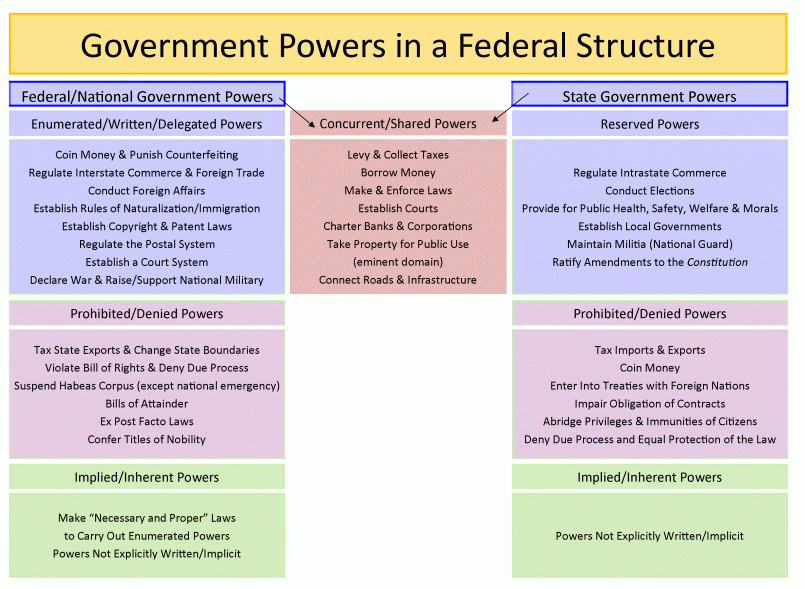
Yes, the system can be changed through constitutional amendments, though this is deliberately difficult-requiring two-thirds approval in Congress and ratification by three-fourths of states. More commonly, the system evolves through judicial interpretations, political practices, and legislative refinements. Major structural changes like adding or eliminating a branch would require formal constitutional amendment, while adjustments to how branches interact often occur through legislation and court decisions.
How do states mirror the federal three-branch structure?
All 50 states have adopted the three-branch model in their own constitutions, with legislatures (some bicameral, some unicameral), governors heading executive branches, and state court systems. However, states often modify the federal model with features like elected judges, term limits, direct democracy mechanisms (initiatives and referendums), and different balances of power. Nebraska is unique in having a unicameral (single-house) legislature, while other states have varying levels of executive power.
What happens when branches can't resolve their disagreements?
The system is designed for conflict resolution through established processes: Congress can override vetoes with supermajorities; courts can resolve disputes between branches; impeachment provides a remedy for serious executive misconduct. When these mechanisms fail, the result is often gridlock-government shutdown, delayed appointments, or policy stagnation. The founders viewed some degree of friction as a feature rather than a bug, believing that important changes should require broad consensus rather than simple majorities.
Which founding fathers were most influential in creating the three-branch system?
James Madison is often credited as the principal architect of the three-branch structure, articulating its rationale in the Federalist Papers. Alexander Hamilton strongly advocated for an energetic executive branch. John Adams had written extensively about balanced government in his "Thoughts on Government." George Washington's willingness to limit his own power as the first president established crucial precedents. Thomas Jefferson, though not at the Constitutional Convention, influenced the system through his earlier work on the Virginia Constitution and subsequent interpretations as president.


