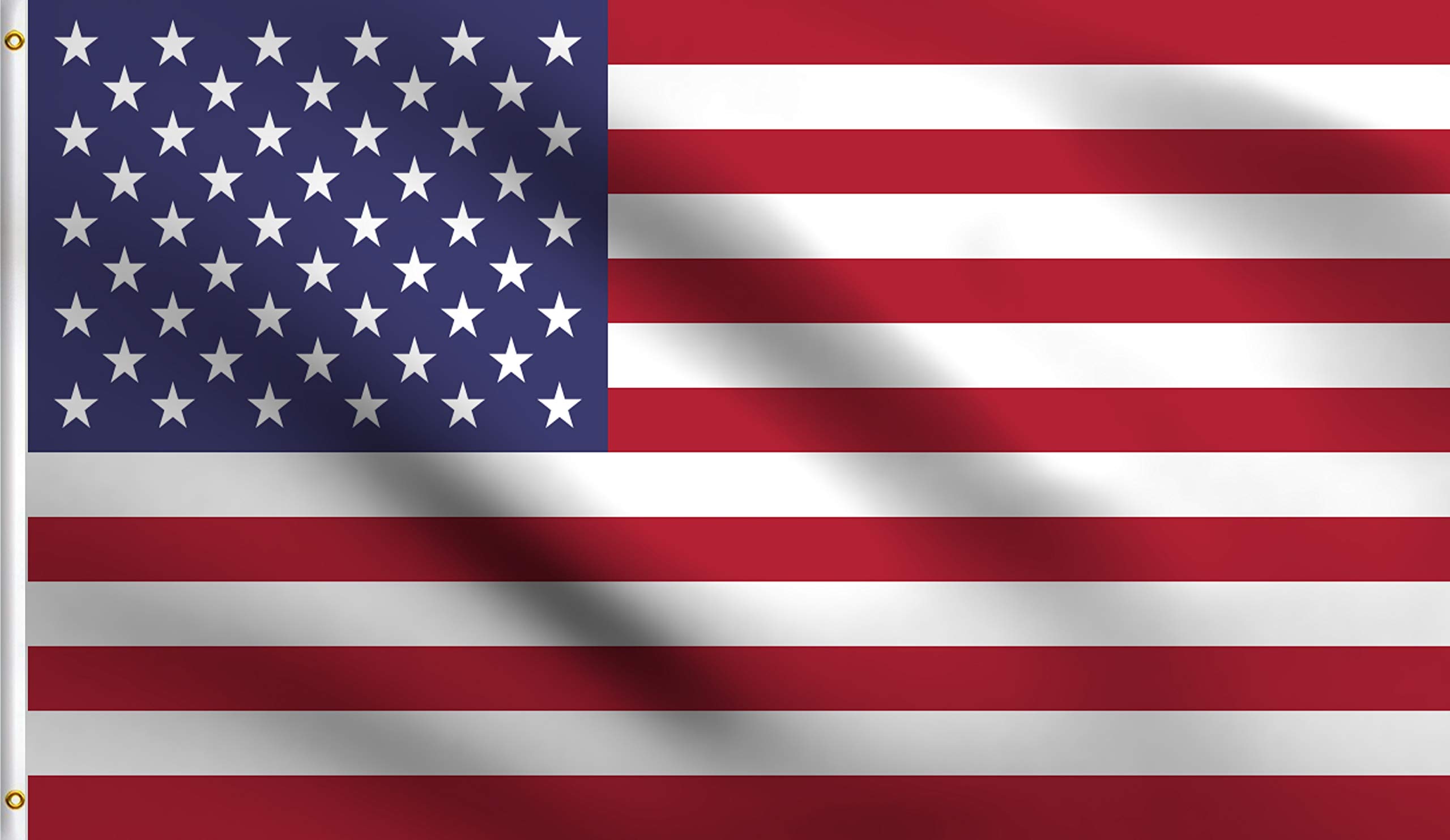
The American flag's 50 stars represent each state in the union, but this iconic design has a rich history of evolution as the nation grew. From the original 13-star flag to today's familiar design, each star tells the story of American expansion and development.
The American flag, with its distinctive pattern of 50 stars and 13 stripes, stands as one of the most recognizable national symbols in the world. Behind this iconic design lies a fascinating history that mirrors America's growth from a small collection of colonies to a union of 50 states. The stars on the flag aren't merely decorative elements-they represent the evolving nature of American statehood and tell the story of national expansion.
From its humble beginnings as a 13-star banner to the current 50-star design, the American flag has been redesigned nearly 30 times throughout history. Each iteration marks a significant milestone in the nation's development, carefully documenting America's territorial growth and the admission of new states into the union.
Early American Flag History
The first official American flag, often credited to Betsy Ross, featured 13 stars arranged in a circle on a blue field, representing the original 13 colonies that declared independence from Great Britain. This design was officially adopted by the Continental Congress on June 14, 1777-a date now celebrated as Flag Day. The congressional resolution stated that "the flag of the United States be thirteen stripes, alternate red and white; that the union be thirteen stars, white in a blue field, representing a new constellation."
Interestingly, the arrangement of stars wasn't specified in the original flag legislation, leading to several variations in early American flags. Some featured stars in rows, others in circles or even unique patterns that reflected the artistic interpretation of individual flag makers.

Symbolism of Stars and Stripes
The elements of the American flag carry deep symbolic meaning. The 50 stars represent each state in the union, while the 13 stripes commemorate the original British colonies that formed the first United States of America. The colors themselves hold significance: red symbolizes valor and bravery, white represents purity and innocence, and blue signifies vigilance, perseverance, and justice.
Charles Thomson, Secretary of the Continental Congress, explained the symbolism when the Great Seal of the United States was adopted in 1782: "White signifies purity and innocence, Red, hardiness & valor, and Blue signifies vigilance, perseverance & justice." This same symbolic color scheme was naturally applied to the national flag.
Evolution of Stars as States Joined
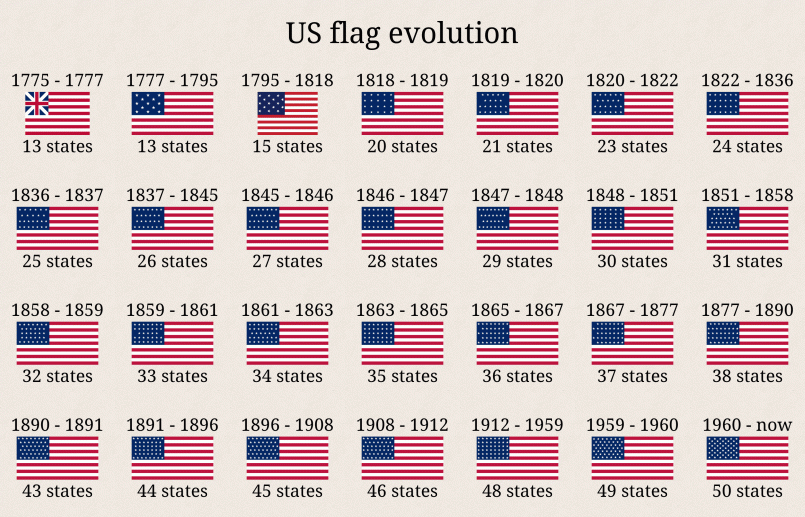
As new states joined the Union, the flag evolved to reflect the growing nation. Initially, Congress passed legislation adding both stars and stripes for new states. By 1795, the flag featured 15 stars and 15 stripes after Vermont and Kentucky gained statehood. However, it soon became apparent that continually adding stripes would make the flag unwieldy.
In 1818, Congress passed the Flag Act, establishing that the flag would maintain 13 stripes to honor the original colonies, while stars would be added for each new state. This act also specified that new stars would be added on the July 4th following a state's admission to the union.
Some of the most notable flag transitions include:
- The 20-star flag (1818) after 5 new states joined
- The 31-star flag (1851) following California's admission
- The 48-star flag (1912) after New Mexico and Arizona became states
- The 49-star flag (1959) with Alaska's statehood
Each of these changes represented America's westward expansion and territorial growth.
The 50-Star Design
The current 50-star flag was created after Hawaii became the 50th state on August 21, 1959. Following the established protocol, the new flag design was officially adopted on July 4, 1960. The 50-star pattern, with alternating rows of six and five stars, was actually designed by Robert G. Heft in 1958 as a high school project-when there were still only 48 states.
Remarkably, Heft received a B- for his project. However, his teacher promised to reconsider the grade if Congress accepted the design. Heft's pattern was selected from more than 1,500 submissions by President Eisenhower, and his teacher made good on the promise, changing his grade to an A.
This 50-star flag has now flown for over 60 years-longer than any previous version of the American flag-reflecting the stability of the union in the modern era.
Official Flag Regulations
The design and proportions of the American flag are precisely defined in Executive Order 10834, issued by President Eisenhower on August 21, 1959. According to these specifications:
- The flag's width-to-length ratio must be 10:19
- The union (blue field) extends down 7 stripes and across to the edge
- The stars must be arranged in nine alternating rows of 6 and 5 stars
- Each star must have one point oriented upward
The Flag Code, established in 1942, provides guidelines for proper display and treatment of the American flag. These regulations demonstrate the reverence with which Americans view their national emblem and the importance placed on respecting what the 50 stars represent.
Possible Future Changes
Though the 50-star flag has remained unchanged for decades, the possibility of adding new states could necessitate a redesign. Territories like Puerto Rico, Washington D.C., and the U.S. Virgin Islands have periodically considered statehood, which would require adding stars to the flag.
The U.S. Army Institute of Heraldry actually maintains designs for potential future flags with up to 56 stars, ensuring preparedness for any constitutional changes to the union. These potential designs maintain the symbolic integrity of the flag while accommodating additional states.
While no change is imminent, the history of the American flag reminds us that it is a living symbol, designed to grow and evolve with the nation it represents. Just as the journey from 13 to 50 stars tells the story of America's past expansion, any future changes would document the continuing development of the United States.
Frequently Asked Questions About The Story Behind America's 50 Stars: History & Evolution of US Flag
Why does the American flag have exactly 50 stars?
The American flag has 50 stars because each star represents one of the 50 states in the United States. This design was adopted on July 4, 1960, after Hawaii became the 50th state on August 21, 1959. The flag's design has evolved throughout history, with stars being added as new states joined the Union.
What do the 13 stripes on the American flag represent?
The 13 stripes on the American flag represent the original 13 British colonies that declared independence from Great Britain and formed the first states of the Union. The stripes alternate between red and white, with 7 red stripes and 6 white stripes. Unlike the stars, the number of stripes has remained constant since 1818, regardless of how many states joined the union.
Who designed the current 50-star American flag?
The current 50-star American flag was designed by Robert G. Heft in 1958 when he was a 17-year-old high school student. He created it as a class project, anticipating that Hawaii would soon join Alaska as a state. His teacher initially gave him a B- grade, but promised to reconsider if Congress accepted the design. President Eisenhower selected Heft's design from over 1,500 submissions, and his teacher subsequently changed his grade to an A.
How many different official American flag designs have there been?
There have been 27 official versions of the American flag. The design has changed 26 times since the original 13-star flag was adopted in 1777. Most changes occurred when new states joined the Union, requiring additional stars to be added. The current 50-star design has been in use since 1960, making it the longest-used version in American history.
What would happen to the flag if another state joined the Union?
If another state joined the Union, a new flag design with 51 stars would be created and officially adopted on the first July 4th following the state's admission. The U.S. Army Institute of Heraldry maintains contingency designs for flags with up to 56 stars. A 51-star flag would likely feature alternating rows of 9 and 8 stars. Potential candidates for statehood include Puerto Rico, Washington D.C., and various U.S. territories.
When and why is the American flag flown at half-staff?
The American flag is flown at half-staff (or half-mast) as a sign of mourning, respect, or distress. The President, state governors, and the mayor of the District of Columbia can order flags to be flown at half-staff in response to the death of government officials, foreign dignitaries, or during times of national tragedy. There are also annual half-staff observances including Memorial Day (until noon), Peace Officers Memorial Day (May 15), and Patriot Day (September 11).


