In 1803, the United States completed the most consequential real estate deal in its history, doubling its size overnight with the Louisiana Purchase. This monumental transaction between President Thomas Jefferson and Napoleon Bonaparte shaped the nation's destiny and set the stage for westward expansion.
In 1803, President Thomas Jefferson completed what is widely regarded as one of the greatest diplomatic achievements in American history. With the stroke of a pen and $15 million-about $340 million in today's dollars-the United States doubled its territory overnight through the Louisiana Purchase. This monumental land acquisition from France fundamentally altered the trajectory of a young nation, setting the stage for America's westward expansion and eventual rise as a continental power.
The deal stands as perhaps the most significant real estate transaction in history, acquiring approximately 828,000 square miles of territory for roughly 3 cents per acre. Let's explore how this remarkable acquisition came to be and why it proved so transformative for the United States.
What Was the Louisiana Purchase?
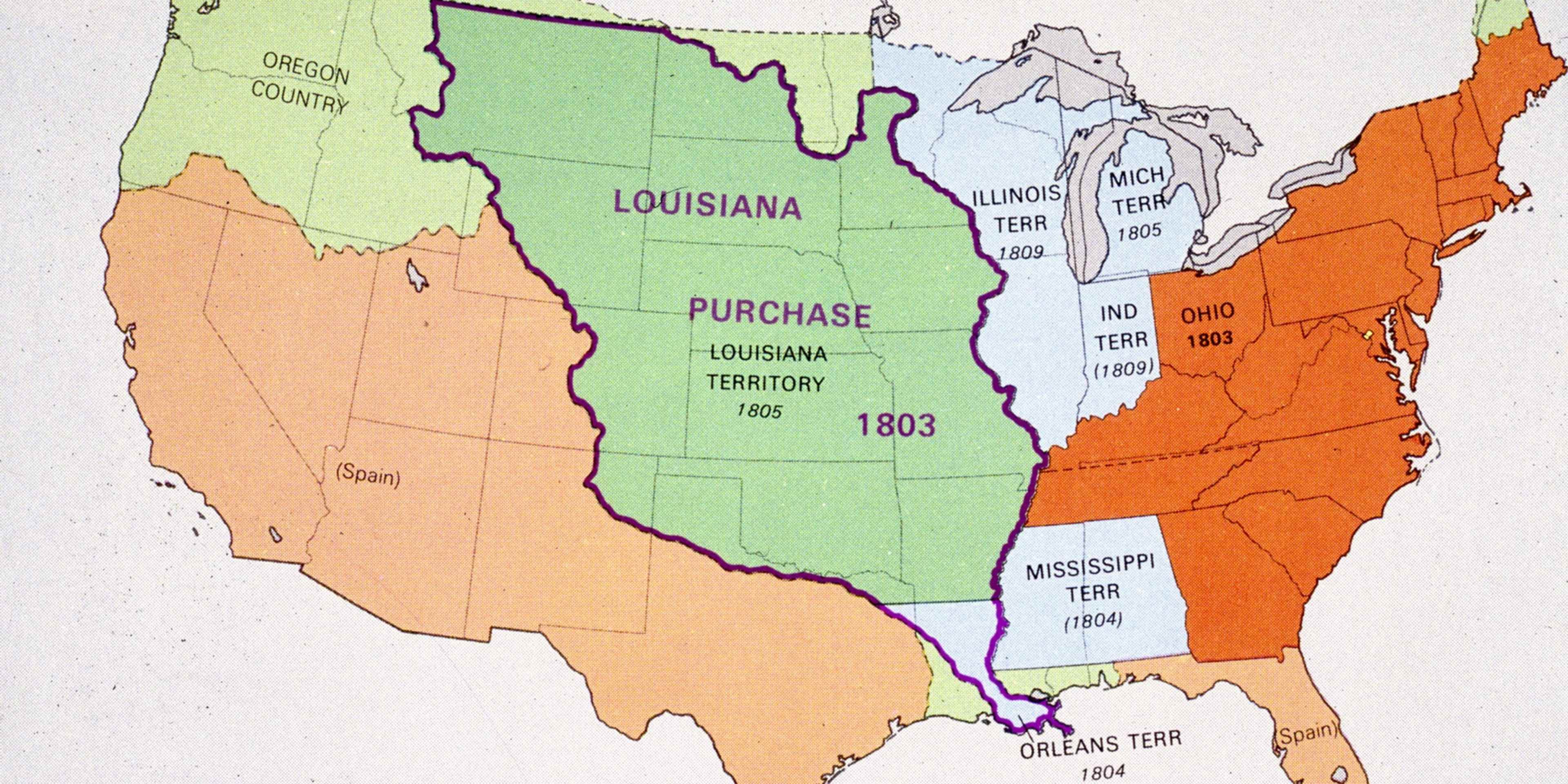
The Louisiana Purchase was a land deal between the United States and France in which the U.S. acquired approximately 828,000 square miles of land west of the Mississippi River for $15 million. The territory stretched from the Mississippi River to the Rocky Mountains and from the Gulf of Mexico to Canada, encompassing all or part of 15 current U.S. states and two Canadian provinces.
Originally claimed by France in the 1600s, the territory had been ceded to Spain in 1762 following France's defeat in the Seven Years' War. However, under the secret Treaty of San Ildefonso in 1800, Spain returned the territory to France under Napoleon Bonaparte's rule-a development that greatly concerned American leaders.

Territorial Impact: How It Doubled America
Before the Louisiana Purchase, the United States consisted of seventeen states primarily along the Atlantic seaboard, with the Mississippi River marking its western boundary. The acquisition effectively doubled the size of the nation, increasing its territory from approximately 890,000 square miles to about 1.7 million square miles.
The purchase included land that would eventually become all or part of these modern states:
- Arkansas
- Missouri
- Iowa
- Oklahoma
- Kansas
- Nebraska
- Minnesota (west of the Mississippi)
- North Dakota
- South Dakota
- New Mexico (northeastern portion)
- Texas (portions)
- Montana
- Wyoming
- Colorado (eastern portion)
- Louisiana (excluding New Orleans area)
This vast expansion fundamentally transformed America from a coastal nation to a continental power with tremendous natural resources and agricultural potential.
Political Context and Negotiations
The political circumstances that led to the Purchase were remarkably complex. President Jefferson's original goal was far more modest-he merely sought to secure navigation rights on the Mississippi River and access to the port of New Orleans, which were vital for American farmers to ship their goods to market.
Jefferson sent James Monroe to join Robert Livingston in Paris with instructions to purchase New Orleans and as much land east of the Mississippi as possible for a maximum of $10 million. What they encountered was unexpected: Napoleon's minister, François Barbé-Marbois, offered the entire Louisiana territory instead.
Several factors influenced Napoleon's decision to sell:
- The failure of French efforts to suppress the Haitian Revolution
- The prospect of renewed war with Britain, requiring financial resources
- The challenge of defending distant North American territory
- A desire to prevent the territory from falling to the British

Constitutional Questions and Controversy
The Louisiana Purchase presented Jefferson with a significant ideological dilemma. As a strict constructionist who believed in limited federal powers, Jefferson questioned whether the Constitution granted the president authority to acquire territory and incorporate new land into the nation.
Jefferson initially considered a constitutional amendment to authorize the purchase. However, concerned that Napoleon might withdraw the offer, he ultimately proceeded without one, justifying his decision under the treaty-making and commerce powers of the Constitution.
The Federalist opposition criticized this apparent contradiction in Jefferson's principles. Nevertheless, the Senate ratified the treaty by a vote of 24-7 on October 20, 1803, and the United States took formal possession on December 20, 1803, in a ceremony in New Orleans known as the "Transfer Day."
Lewis and Clark: Exploring the New Territory
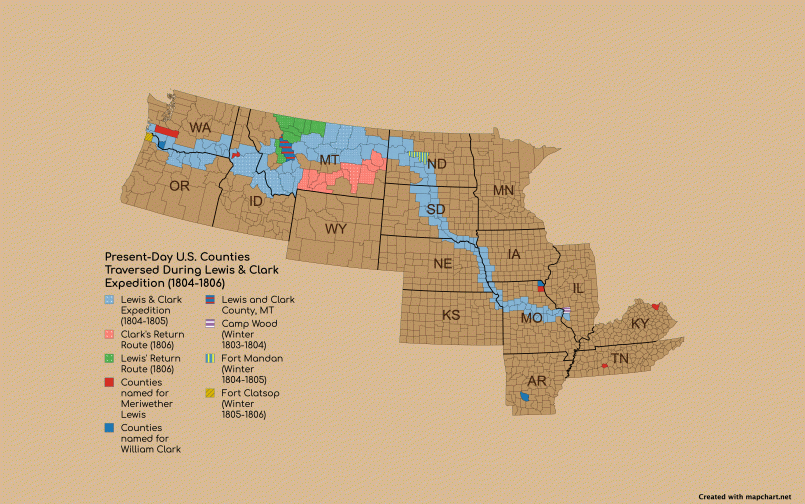
Even before the purchase was finalized, Jefferson had been planning an expedition to explore the western territories. The Louisiana Purchase made this mission even more important. In 1804, Meriwether Lewis and William Clark set out on their famous expedition to explore the newly acquired territory and find a route to the Pacific Ocean.
The Corps of Discovery, as their expedition team was known, traveled for over two years, documenting:
- More than 300 new species of plants and animals
- Detailed maps of previously uncharted territory
- Information about Native American tribes and cultures
- Potential routes for commerce and settlement
This scientific and exploratory mission provided Americans with their first comprehensive understanding of the vast new lands and resources they had acquired and helped fuel the nation's westward expansion in the decades that followed.
Economic Impact of the Purchase
The Louisiana Purchase delivered enormous economic benefits to the United States. Most immediately, it secured control of the Mississippi River and the port of New Orleans, essential for American trade. The territory contained some of the continent's most fertile soil in the Mississippi Valley, which would become America's agricultural heartland.
The acquisition provided access to:
- Vast agricultural lands that would produce wheat, corn, and other crops
- The fur trade of the upper Missouri River basin
- Timber and mineral resources including iron, lead, and later, oil
- Natural navigation routes via river systems
Control of the Mississippi River system allowed American farmers and merchants to ship goods without relying on foreign powers, accelerating economic development. The new western lands also provided space for population growth and eventually served as the breadbasket of the nation.
Long-Term Consequences and Legacy
The Louisiana Purchase ranks among the most consequential events in American history, with repercussions that continue to shape the nation today. The acquisition set in motion:
- Manifest Destiny - The purchase fueled the idea that America was destined to expand across the continent
- Native American displacement - Westward expansion led to conflicts with and forced relocations of indigenous peoples
- Sectional tensions - Questions about whether slavery would be permitted in the new territories intensified divisions that eventually led to the Civil War
- National identity - The vast interior helped shape American character and mythology around frontier life
The purchase also transformed America from a relatively minor player on the world stage to a nation with continental dimensions and ambitions. Within decades, the concept of the United States spanning from the Atlantic to the Pacific would become reality-a transformation that began with Jefferson's bold land deal.
Today, the Louisiana Purchase territory is home to millions of Americans and remains an agricultural and resource powerhouse. The transaction stands as testament to how a single diplomatic opportunity, seized at the right moment, can fundamentally alter a nation's destiny.
Frequently Asked Questions About How the Louisiana Purchase Transformed America: 7 Ways It Doubled US Territory
Why did Napoleon sell the Louisiana Territory?
Napoleon sold the territory for several strategic reasons: he needed funds for his European military campaigns, especially with war against Britain looming; the Haitian Revolution had devastated French forces, making it difficult to defend North American holdings; and he preferred the United States to own the territory rather than his British rivals. The sale allowed Napoleon to focus on European conquests while generating needed revenue.
Did Thomas Jefferson have constitutional authority to make the Louisiana Purchase?
Jefferson himself questioned whether he had constitutional authority to purchase the territory, as the Constitution didn't explicitly grant such power. As a strict constructionist, he initially sought a constitutional amendment but ultimately justified the purchase under treaty-making powers. The decision represented a significant departure from Jefferson's usual strict interpretation of constitutional limits on federal power.
How did the Louisiana Purchase affect Native American tribes?
The Purchase had profound negative consequences for Native American tribes who inhabited the territory. It accelerated American settlement westward, leading to displacement of indigenous peoples from their ancestral lands. The federal government's subsequent policies, including the Indian Removal Act of 1830, forced many tribes to relocate further west, disrupting their cultures and traditions and resulting in significant population losses.
How did the Louisiana Purchase affect the issue of slavery?
The Purchase significantly complicated the slavery question by adding vast new territories where slavery might potentially expand. This led to heated debates about whether new states would enter the Union as free or slave states, culminating in compromises like the Missouri Compromise of 1820. These tensions over the expansion of slavery into western territories eventually contributed to the Civil War.
What unexpected resources were discovered in the Louisiana Purchase territory?
While early assessments valued the agricultural potential of the Mississippi Valley, the territory held far more resources than initially realized. Later discoveries included vast mineral deposits like the gold of the Black Hills, copper in Montana, and eventually massive oil and natural gas reserves. The Great Plains would become one of the world's most productive agricultural regions, while the Missouri River Basin provided hydroelectric power potential.
How did France initially acquire the Louisiana Territory?
France first claimed the Louisiana Territory in 1682 when explorer René-Robert Cavelier, Sieur de La Salle, traveled down the Mississippi River and claimed the entire basin for France, naming it Louisiana after King Louis XIV. However, France lost the territory to Spain in 1762 following defeat in the Seven Years' War, only to regain it secretly under the Treaty of San Ildefonso in 1800 during Napoleon's rule.