
Every ten years, a constitutional mandate transforms American politics. The US Census does far more than count people-it fundamentally reshapes congressional representation, redraws political boundaries, and redistributes billions in federal funding. Understanding this process reveals how population shifts create political winners and losers, why accuracy matters intensely, and how a single survey influences power dynamics for an entire decade.
The United States Census stands as one of the most politically consequential events in American democracy, yet many citizens underestimate its profound impact. Mandated by the Constitution every ten years, this comprehensive population count does far more than generate statistics-it fundamentally redistributes political power across states, influences presidential elections, and determines how trillions of dollars in federal funding flow to communities nationwide.
From congressional seat allocation to the redrawing of district boundaries, census results trigger a cascade of political consequences that shape governance for an entire decade. Population shifts documented by the census create clear winners and losers in the American political landscape, making participation rates, counting accuracy, and data interpretation subjects of intense partisan debate and legal challenges.
Constitutional Foundation and Historical Context
Article I, Section 2 of the US Constitution establishes the census requirement, directing that an "actual Enumeration" be conducted every ten years. The Founding Fathers included this provision to ensure proportional representation based on population rather than allowing states equal influence regardless of size. This constitutional mandate makes the census one of the few governmental activities explicitly required by America's founding document.
The first census in 1790 counted approximately 3.9 million people, while the 2020 Census documented over 331 million residents. Throughout American history, census methodology has evolved dramatically-from door-to-door enumeration by federal marshals to modern digital response options. Each decade's count has reflected contemporary political debates, from the three-fifths compromise regarding enslaved persons to current controversies over citizenship questions and undocumented immigrants.

The census has always carried political weight, but technological advances and increasingly sophisticated data analysis have amplified its influence. States now use detailed census data combined with powerful mapping software to draw district boundaries with surgical precision, making the quality and completeness of census data more consequential than ever before.
Congressional Reapportionment: Shifting Seats of Power
The most direct political impact of the census occurs through congressional reapportionment-the process of redistributing the 435 seats in the House of Representatives based on population changes. States experiencing population growth gain congressional seats and corresponding political influence, while states with declining or slower-growing populations lose representation in the nation's legislature.
The 2020 Census triggered significant reapportionment, with Texas gaining two seats and Colorado, Florida, Montana, North Carolina, and Oregon each gaining one. Conversely, California lost a congressional seat for the first time in its history, while Illinois, Michigan, New York, Ohio, Pennsylvania, and West Virginia each lost one seat. These shifts reflect decades of population migration from the Rust Belt to the Sun Belt, fundamentally altering the balance of congressional power.
The reapportionment formula, known as the Method of Equal Proportions, has been used since 1940 and involves complex mathematical calculations to distribute seats as fairly as possible. However, even small counting errors can have enormous consequences-New York lost a congressional seat in 2020 by a margin of just 89 people, demonstrating how razor-thin margins can shift political power.
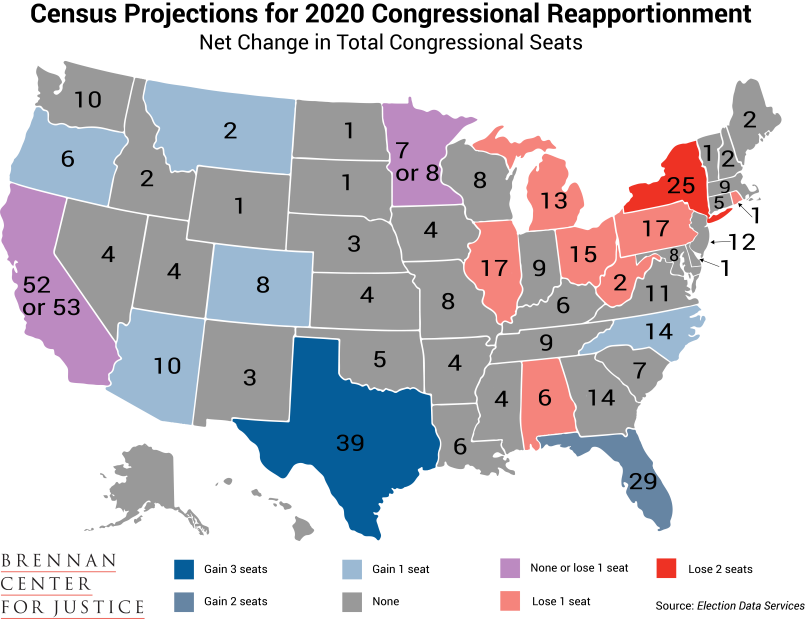
Each congressional seat represents not just legislative voting power but also committee assignments, leadership opportunities, and the ability to shape national policy. States losing seats experience diminished influence in Congress, while growing states gain leverage to advance their regional interests and secure federal projects and funding.
Redistricting and Gerrymandering Controversies
Following reapportionment, states must redraw their congressional district boundaries to reflect population changes-a process called redistricting. In most states, the legislature controls this process, creating opportunities for the party in power to draw districts that maximize their electoral advantage, a practice known as gerrymandering.
Modern gerrymandering employs two primary techniques: "packing" concentrates opposition voters into a few districts, wasting their votes in overwhelming victories, while "cracking" splits opposition voters across multiple districts to dilute their influence. Sophisticated mapping software and detailed census data allow political operatives to predict voting patterns with remarkable accuracy, drawing bizarrely shaped districts that achieve partisan goals while technically maintaining population equality.
The political stakes of redistricting are enormous. A party that controls redistricting in a large state can potentially lock in congressional majorities for an entire decade, even if they don't win more votes statewide. After the 2010 Census, Republicans controlled redistricting in key states through a coordinated effort called REDMAP (Redistricting Majority Project), which many analysts credit with helping them maintain House control throughout most of the decade despite losing the national popular vote in several elections.
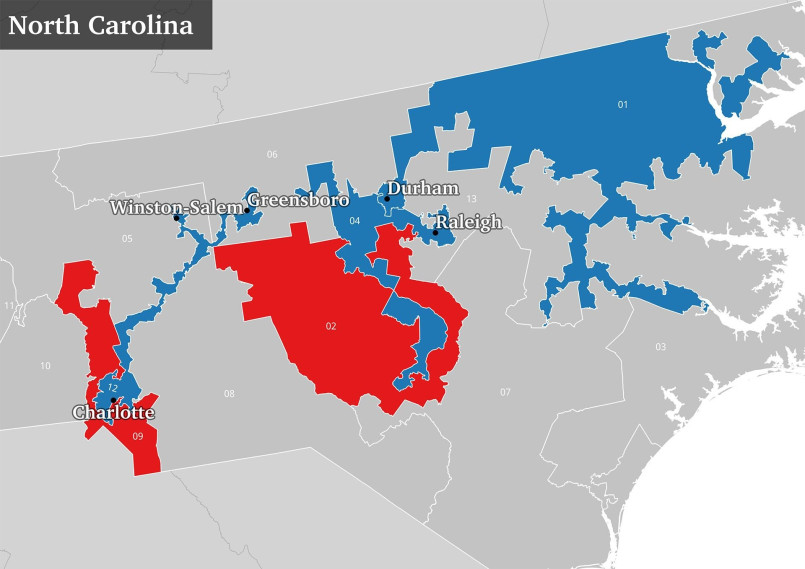
Some states have attempted to address gerrymandering concerns by establishing independent redistricting commissions that remove the process from direct legislative control. California, Arizona, Michigan, and several other states now use citizen commissions or hybrid approaches designed to produce more competitive districts and fairer representation. However, the US Supreme Court ruled in Rucho v. Common Cause (2019) that federal courts cannot intervene in partisan gerrymandering cases, leaving reform efforts to states and voters.
Electoral College Impact on Presidential Elections
Census results directly influence presidential elections through their effect on the Electoral College. Each state's electoral votes equal its combined number of senators and representatives, meaning reapportionment automatically shifts electoral college strength. The 2020 Census changes gave traditionally Republican-leaning states a net gain of approximately three electoral votes, though voting patterns can shift over a decade.
This electoral college rebalancing can prove decisive in close presidential races. The 2000 and 2016 elections were decided by narrow margins in a handful of states, where even a single electoral vote could have changed the outcome. As population continues migrating toward Sun Belt states like Texas, Florida, Arizona, and Georgia, the electoral map's center of gravity shifts accordingly, forcing presidential campaigns to adjust their strategies and resource allocation.
Beyond the raw number of electoral votes, census-driven redistricting affects how states divide electoral votes in Maine and Nebraska, the only states that allocate electoral votes by congressional district rather than winner-take-all. Changes in district boundaries can flip individual electoral votes even without statewide voting pattern shifts.

The interplay between census counts and presidential politics creates intense pressure for accuracy in population enumeration. An undercount in politically competitive states can reduce their influence in both Congress and presidential elections, while overcounting inflates political power. This dynamic explains why census methodology, including questions about citizenship and undocumented residents, generates fierce partisan debate.
Federal Funding Allocation: The Financial Stakes
While less visible than congressional seats, census data's influence on federal funding distribution may have even greater practical impact on American lives. The federal government uses census data to allocate more than $1.5 trillion annually across approximately 300 programs, including Medicaid, highway construction, education grants, housing assistance, and rural development initiatives.
Population undercounts directly translate to reduced federal funding for affected communities. The George Washington University Institute of Public Policy estimated that each person missed in the census costs their state approximately $2,000 per year in federal funding over the following decade. For large states, systematic undercounts can mean billions in lost resources for healthcare, infrastructure, schools, and social services.
Certain populations face higher risk of being undercounted, including young children, racial minorities, rural residents, renters, and undocumented immigrants. These groups often live in communities that already struggle with inadequate resources, meaning census undercounts compound existing inequalities. A 2020 Census Bureau report found that Black and Hispanic populations were undercounted while white and Asian populations were overcounted, perpetuating disparities in political representation and resource allocation.

Beyond direct funding formulas, census data influences countless private sector decisions about where to locate businesses, build housing, and invest in infrastructure. Retailers, healthcare systems, and financial institutions use census data for market analysis and site selection, meaning accurate counts affect economic development and job creation for years following enumeration.
Political Strategies Around Census Participation
Given the enormous stakes, both major political parties have developed sophisticated strategies to influence census outcomes and leverage results for political advantage. Efforts to maximize participation in favorable demographics, challenges to census methodology, and legal battles over data collection questions have all become standard features of modern census cycles.
The 2020 Census became particularly contentious when the Trump administration attempted to add a citizenship question, which critics argued would suppress participation among immigrant communities and undocumented residents. The Supreme Court ultimately blocked the question, but the controversy highlighted how seemingly technical census decisions carry profound political implications. Lower participation in immigrant communities would have reduced population counts in Democratic-leaning urban areas, potentially shifting congressional seats and electoral votes toward Republican-leaning states.
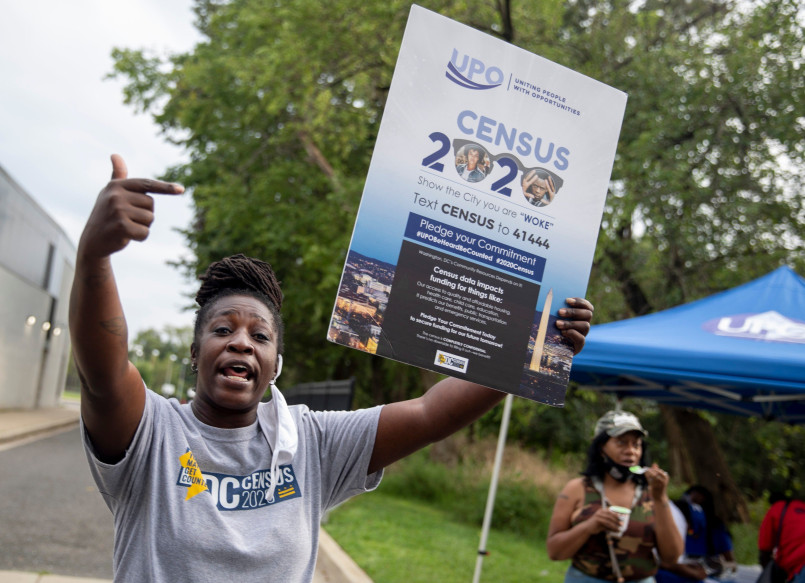
Political organizations invest heavily in "Get Out The Count" campaigns targeting populations at risk of being undercounted. These efforts mirror voter turnout operations, with door-to-door outreach, multilingual materials, and community partnerships designed to maximize participation. States and localities also fund census outreach, recognizing that higher response rates protect their political influence and federal funding for the coming decade.
Post-census legal challenges have become increasingly common, with states contesting both the counting methodology and apportionment results. After the 2020 Census, several states filed lawsuits challenging the inclusion or exclusion of specific populations, the handling of the COVID-19 pandemic's impact on data collection, and alleged technical errors. These legal battles can delay redistricting and create uncertainty in the political landscape.
Looking toward 2030 and beyond, demographic trends suggest continued population shifts toward southern and western states, likely accelerating the political realignment already underway. States anticipating seat losses have intensified efforts to improve census accuracy, while growing states position themselves to maximize gains. The census has evolved from a simple population count into a high-stakes political contest where strategy, litigation, and grassroots organizing can shift the balance of American political power.
Frequently Asked Questions About How the US Census Influences Power and Politics: 5 Major Impacts
How does the US Census affect congressional representation?
The census determines how the 435 House of Representatives seats are distributed among states based on population. States with population growth gain congressional seats, while states with declining or slower growth lose seats. This reapportionment directly shifts legislative power and influences which states have greater influence over federal lawmaking for the next decade.
What is gerrymandering and how does the census enable it?
Gerrymandering is the practice of drawing congressional district boundaries to favor one political party over another. After each census, states must redraw districts to reflect population changes. The party controlling this process can use detailed census data to strategically pack opposition voters into few districts or crack them across many districts, maximizing their own electoral advantage for up to ten years.
How does the census influence presidential elections?
Census results determine each state's number of electoral votes by affecting congressional seat allocation. States gain or lose electoral votes based on population changes documented in the census. The 2020 Census shifted approximately three electoral votes toward traditionally Republican-leaning states, though voting patterns can change over time. In close elections, even a single electoral vote can prove decisive.
How much federal funding depends on census data?
The federal government distributes over $1.5 trillion annually using census data across approximately 300 programs, including Medicaid, highway funding, education grants, and housing assistance. Each person missed in the census costs their community roughly $2,000 per year in federal funding over the following decade, making accuracy critically important for state and local budgets.
Which populations are most at risk of being undercounted?
Young children, racial and ethnic minorities, rural residents, renters, low-income individuals, and undocumented immigrants face the highest risk of census undercount. These populations often live in hard-to-reach areas or may distrust government data collection. Undercounts in these communities reduce their political representation and federal funding, perpetuating existing inequalities.
Why was the citizenship question on the 2020 Census so controversial?
Critics argued that adding a citizenship question would suppress participation among immigrant communities and households with undocumented members due to fear of government consequences. Lower participation in these predominantly urban, Democratic-leaning areas could have shifted congressional seats and electoral votes toward Republican-leaning states. The Supreme Court ultimately blocked the question from being included.
Can states challenge census results?
Yes, states can and do file legal challenges to census methodology, counting procedures, and apportionment results. After the 2020 Census, several states sued over various aspects of data collection and processing. These challenges can delay redistricting and create political uncertainty, though successfully overturning census results is extremely rare due to deference given to Census Bureau expertise.
How have independent redistricting commissions changed the political landscape?
Several states including California, Arizona, and Michigan have established independent or bipartisan commissions to handle redistricting, removing direct legislative control. These commissions aim to create more competitive districts and reduce partisan gerrymandering. Early evidence suggests they produce more proportional representation, though their long-term political impact continues to be studied and debated.


