From Wyoming's 580,000 residents to California's 39 million, every state sends exactly two senators to Washington. This seemingly undemocratic arrangement was actually a brilliant compromise that saved the Constitution from failure-and it remains one of the most powerful features of American government that most people don't fully understand.
The United States Senate stands as one of the most distinctive legislative bodies in the world. Unlike almost every other democratic chamber, representation in the Senate is not based on population-California's 39 million residents have the same two senators as Wyoming's 580,000. This arrangement isn't an oversight or antiquated quirk that survived by accident. It's a deliberate constitutional design that emerged from one of the most contentious debates in American history.
Understanding why each state has exactly two senators requires traveling back to the sweltering summer of 1787 in Philadelphia, where the entire Constitutional Convention nearly collapsed over this very issue. The solution they devised fundamentally shaped American federalism and continues to influence everything from Supreme Court appointments to climate legislation today.
The Great Compromise of 1787
The Constitutional Convention faced a seemingly insurmountable problem. The Articles of Confederation had failed, and delegates gathered to create a stronger national government. But how should states be represented in this new legislature?
Large states, led by Virginia, proposed the Virginia Plan: representation based entirely on population. This made sense to populous states-more people should mean more votes. Small states like New Jersey and Delaware saw this as a path to irrelevance and proposed the New Jersey Plan: equal representation for each state, just like under the Articles of Confederation.

The debate grew so heated that delegates threatened to walk out. Roger Sherman of Connecticut and other moderates proposed what became known as the Connecticut Compromise or Great Compromise: a bicameral legislature with two chambers serving different purposes. The House of Representatives would be based on population, giving large states their proportional voice. The Senate would give each state equal representation with two senators, protecting small state interests.
This wasn't just a political deal-it reflected a fundamental principle. The Founders envisioned states as sovereign entities that were joining together to form a union. In this view, states themselves (not just their populations) deserved representation in the federal government.
Small States vs Large States: The Original Debate
The divide between large and small states in 1787 was existential. Delaware's delegates explicitly stated they would leave the convention if equal state representation wasn't guaranteed. Without Delaware and other small states, there would be no Constitution and possibly no United States.
Small states feared that proportional representation would allow large states to:
- Control all federal appointments and judicial nominations
- Pass laws that benefited large states at small states' expense
- Impose taxes and regulations without considering regional differences
- Eventually absorb or marginalize smaller states entirely
Large states countered that equal representation was fundamentally undemocratic-why should a citizen in Delaware have more voting power than a citizen in Virginia? They argued that individuals, not states, should be the basis of representation in a republic.
The compromise acknowledged both perspectives had merit. The result was a dual system: one chamber (the House) represents people, while the other (the Senate) represents states as political units.
The Constitutional Guarantee That Cannot Change
The two-senator rule appears in Article I, Section 3 of the Constitution: "The Senate of the United States shall be composed of two Senators from each State." But the Founders went further to protect this arrangement.
Article V, which outlines the constitutional amendment process, includes a unique protection: "no State, without its Consent, shall be deprived of its equal Suffrage in the Senate." This is the only provision in the Constitution that cannot be amended through the normal process.

This means that even if 49 states wanted to change Senate representation, the 50th state could block it. Theoretically, you could amend this unamendable clause itself, but that would require unanimous consent of all 50 states-something virtually impossible to achieve on such a fundamental issue.
The Founders made this provision unchangeable because they knew small states would never have ratified the Constitution without this ironclad guarantee. It was the price of union, and it remains permanent.
Population Disparities and Senate Power Today
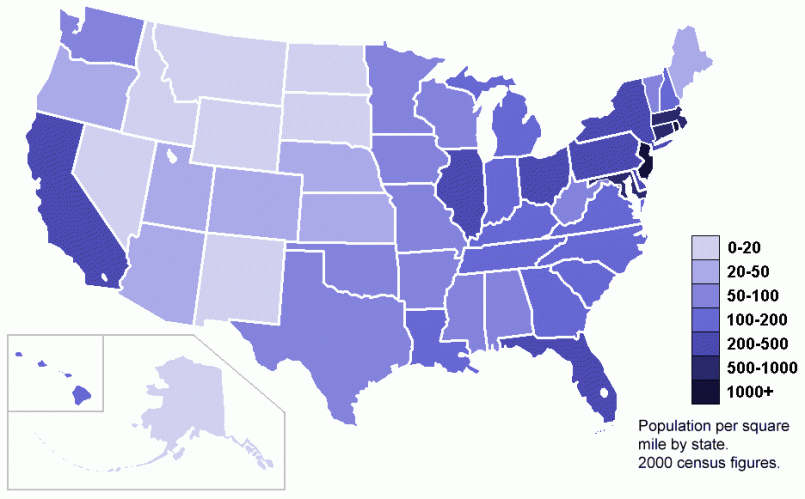
The population gap between states has grown dramatically since 1787. When the Constitution was ratified, Virginia (the largest state) had about 12 times the population of Delaware (the smallest). Today, California has nearly 70 times the population of Wyoming.
This creates striking mathematical realities:
- The 26 smallest states contain only 18% of the US population but control 52% of the Senate
- A senator from Wyoming represents roughly 290,000 people, while a California senator represents 19.5 million
- Theoretically, senators representing just 17% of Americans could block any legislation
- The smallest 21 states, with 11% of the population, could ratify a constitutional amendment
Supporters argue this is exactly what the system was designed to do-prevent large population centers from dominating rural and small states. Critics call it undemocratic and point out that it gives disproportionate power to less diverse, more rural states.
How the House of Representatives Balances This System
The House of Representatives was designed as the counterbalance to the Senate. Originally, House seats were apportioned based on population with no fixed limit. Currently, the House has been capped at 435 members since 1929, with seats redistributed after each census.
California has 52 House representatives; Wyoming has 1. This gives California 52 times more influence in the House, roughly proportional to its population advantage. For legislation to pass, it must clear both chambers, theoretically requiring both popular will (House) and state consensus (Senate).
However, the balance isn't perfect:
- Senate approval is required for Supreme Court justices, Cabinet members, and federal judges
- Treaties require a two-thirds Senate vote, with no House involvement
- Impeachment trials occur in the Senate, not the House (which only brings charges)
- The Senate confirms all major executive appointments
These exclusive Senate powers mean that equal state representation affects far more than just legislation-it shapes the entire structure of the federal government.
Impact on Legislation and Federal Appointments
The two-senator rule has profound effects on American governance. Rural states have successfully blocked or modified legislation on issues ranging from gun control to environmental regulations. Conversely, they've been unable to pass measures opposed by populous states without building broad coalitions.
In recent decades, the impact on judicial appointments has become particularly significant. Supreme Court justices are nominated by the president but confirmed by the Senate. This means that a party can control the Senate-and thus the confirmation process-while representing a minority of Americans.

Between 2016 and 2020, three Supreme Court justices were confirmed by senators representing less than half the US population. Supporters note this is constitutionally proper; critics argue it undermines the Court's legitimacy.
The Senate's role in appointments extends to:
- Federal district and appeals court judges (over 800 positions)
- Cabinet secretaries and major agency heads
- Ambassadors and diplomatic posts
- Key positions like the Federal Reserve chair
This gives states with small populations outsized influence over the judicial branch and executive agencies that affect all Americans.
Modern Criticisms and Defense of Equal Representation
Critics of the two-senator system argue it's antidemocratic and gives disproportionate power to rural, predominantly white states. They point out that the Founders couldn't have anticipated current population disparities or modern urban concentration. Some propose reforms like:
- Admitting Washington DC and Puerto Rico as states (adding four senators representing diverse urban populations)
- Dividing large states like California into multiple states
- Constitutional amendment to make Senate representation proportional (essentially impossible given Article V)
- Eliminating the Senate's exclusive powers over appointments
Defenders of equal representation counter that the system prevents tyranny of the majority and ensures that diverse regional interests are heard. They argue that:
- The United States is a federal republic, not a pure democracy-states matter as political units
- Population centers would dominate policy without Senate balance, ignoring agricultural and rural concerns
- The system forces coalition-building and compromise rather than simple majority rule
- Smaller states contribute disproportionately in other ways (military recruitment, natural resources, food production)

Political scientists note that the Senate's equal representation creates a strong incentive for federalism-when national consensus is impossible, issues default to state control. This may frustrate national policy advocates but preserves state autonomy on contentious issues.
The debate ultimately reflects competing visions of American government: Is the United States primarily a nation of individual citizens or a union of semi-sovereign states? The two-senator rule embodies the Founders' answer-it's both, and the tension between these principles remains creative and challenging more than 230 years later.
Frequently Asked Questions About Why Every US State Has Exactly 2 Senators Regardless of Population
Can the two-senator rule ever be changed?
Technically no, not without unanimous state consent. Article V of the Constitution states that no state can be deprived of equal representation in the Senate without its consent. This makes it the only truly unamendable provision in the Constitution, as even one state could block any change.
Why did the Founders choose two senators per state instead of one or three?
Two senators allowed for continuous representation even when one was absent or ill, prevented a single person from wielding too much power, and allowed for staggered elections (one seat per state every three years in the original rotation). It also made tie votes less common than having one senator per state would have.
Which state has the most power per person in the Senate?
Wyoming has the most Senate power per capita, with each senator representing approximately 290,000 people. In contrast, each California senator represents about 19.5 million people, meaning a Wyoming resident has roughly 67 times more Senate representation than a California resident.
Were senators always elected by popular vote?
No. Originally, senators were chosen by state legislatures, not directly by voters. The 17th Amendment, ratified in 1913, changed this to direct popular election. This was intended to reduce corruption and make senators more accountable to citizens rather than state politicians.
Do any other countries have similar systems?
Several federal systems have upper chambers with equal state or regional representation, including Australia, Switzerland, and Brazil. However, most democratic countries use proportional representation in all legislative chambers. The US Senate is unusual in having equal representation combined with such significant powers over appointments and treaties.
What would happen if a new state were admitted to the US?
Any new state would automatically receive two senators, just like all existing states. This has happened 37 times since the original 13 states. The most recent were Alaska and Hawaii in 1959. Current proposals for statehood include Washington DC and Puerto Rico, which would add four senators.