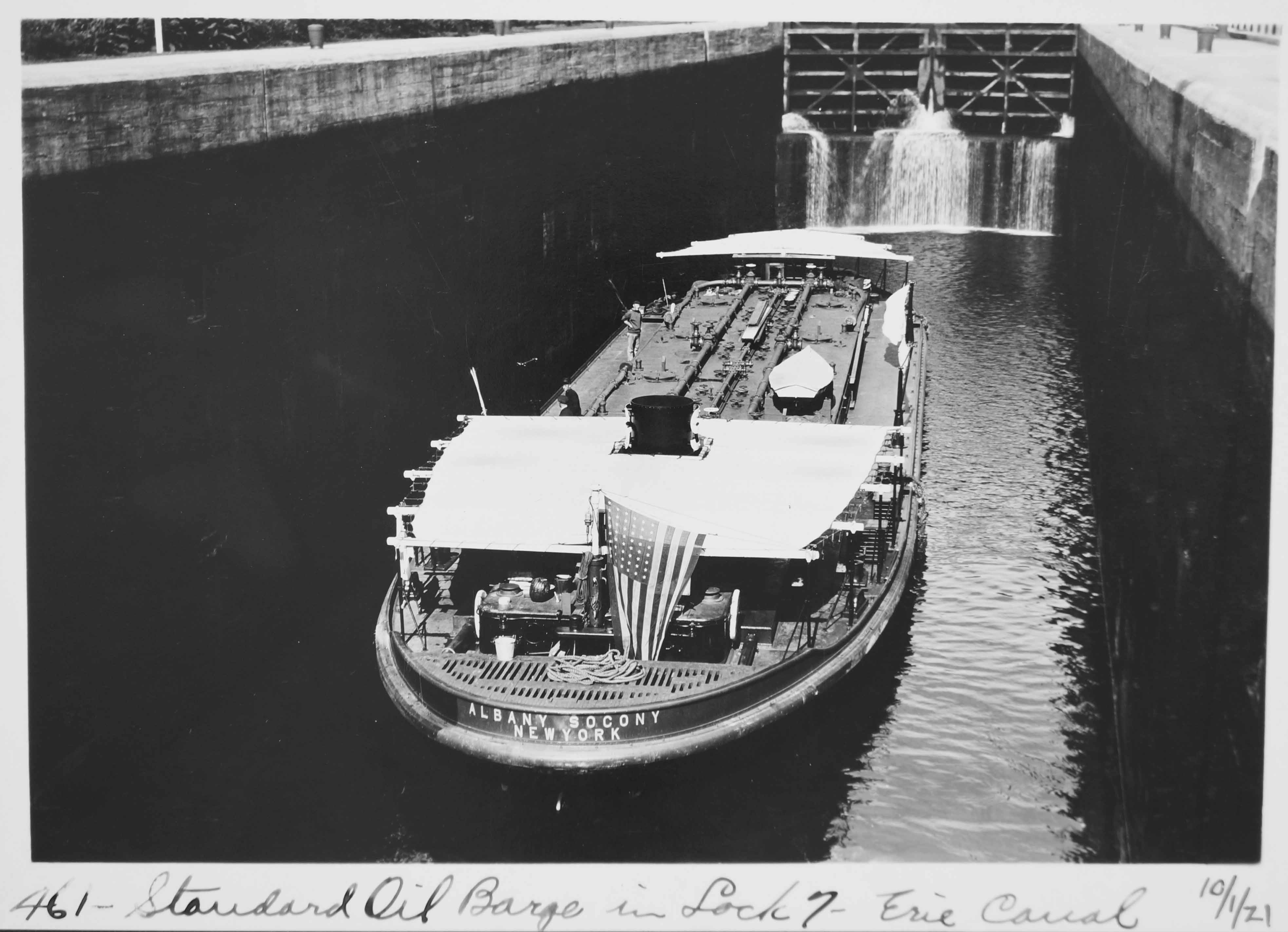
The Erie Canal was America's most ambitious early infrastructure project, creating a water highway that connected the Atlantic Ocean to the Great Lakes. This engineering marvel slashed shipping costs by 95%, transformed New York City into America's premier commercial center, and accelerated westward expansion.
In 1825, the blast of cannons echoed across New York State in a coordinated celebration announcing the completion of what many had deemed impossible: the Erie Canal. This 363-mile waterway connected Buffalo on Lake Erie to Albany on the Hudson River, effectively linking the Great Lakes to the Atlantic Ocean. What contemporaries called "Clinton's Ditch" (after Governor DeWitt Clinton who championed its construction) would soon transform American commerce, settlement patterns, and national development in ways that few could have anticipated.
Built primarily by hand with simple tools and raw determination, the Erie Canal stands as one of America's greatest early infrastructure achievements. Its impact on trade and commerce was immediate and profound, creating ripple effects that would permanently alter the economic geography of the United States.
Engineering Marvel of the 19th Century
The construction of the Erie Canal represented an unprecedented engineering challenge for the young nation. When construction began in 1817, no American engineer had ever built a canal longer than two miles. The proposed route required overcoming significant geographical obstacles, including dense forests, swamps, and an elevation change of 571 feet between Albany and Buffalo.
The solution came in the form of 83 locks that raised and lowered boats like watery elevators. These engineering feats allowed vessels to navigate the changing elevations across New York State. The canal measured 40 feet wide and 4 feet deep, dimensions that seem modest today but were revolutionary for their time.

Perhaps most remarkably, the canal was built without the benefit of civil engineers - America had none at the time. Instead, judge and amateur engineer Benjamin Wright supervised the project, learning and innovating as construction progressed. Workers, many of them Irish immigrants, earned about $0.80 per day while digging the canal mostly by hand, using horses, oxen, and primitive equipment.
The Economic Revolution in Transportation
Prior to the canal's completion, transporting goods between the Great Lakes region and New York City was extraordinarily expensive and time-consuming. Freight costs ran as high as $100 per ton, and the journey took weeks overland. The Erie Canal slashed both figures dramatically - reducing shipping costs to $5-10 per ton and cutting travel time to just 10 days.
This economic transformation can hardly be overstated. The canal effectively reduced shipping costs by 90-95%, creating immediate and dramatic shifts in trading patterns. Midwestern farmers could now affordably ship their grain to Eastern markets and beyond to Europe. Manufactured goods from the East could reach Western settlers at reasonable prices.
The canal also introduced a more reliable shipping schedule, less dependent on seasonal road conditions. While the canal froze in winter, its seven-to-eight-month operating season offered more consistent service than muddy spring roads or drought-affected river transport.
New York's Rise to Commercial Dominance
Perhaps no entity benefited more from the Erie Canal than New York City. Before the canal, Philadelphia, Baltimore, and Boston competed fairly evenly as America's principal ports and commercial centers. The Erie Canal gave New York a decisive advantage - direct access to the resource-rich interior of North America.
The effects were swift and dramatic. By 1830, New York handled more than half of the nation's imports and exports. The city's population exploded from 123,000 in 1820 to 312,000 by 1840. Commercial services flourished - banking, insurance, and shipping firms all expanded rapidly to serve the growing trade.

The canal also transformed upstate New York. Buffalo, Rochester, Syracuse, and dozens of smaller towns along the canal corridor experienced remarkable growth. Buffalo, positioned at the western terminus, grew from a small frontier outpost of 2,000 residents in 1820 to over 18,000 by 1840.
Westward Expansion and Settlement
The Erie Canal accelerated America's westward expansion by making the journey more practical and affordable for settlers. Families could travel by packet boat to the Great Lakes region, bringing more possessions than would be possible by wagon. The lower freight rates also meant that pioneers could establish economically viable farms and businesses in the Midwest, knowing they could profitably ship goods to Eastern markets.
The canal created a two-way stream of influence and commerce. Eastern manufactured goods, ideas, and cultural norms flowed westward, while agricultural products, raw materials, and frontier perspectives traveled east. This exchange helped bind the growing nation together at a critical period of expansion.
States around the Great Lakes benefited enormously. Ohio, Michigan, Indiana, Illinois, and Wisconsin all saw accelerated development patterns directly linked to their new connection to Eastern markets via the Erie Canal. Cities like Cleveland, Detroit, Chicago, and Milwaukee grew rapidly, their economies tightly integrated with New York's commercial networks.
Cultural and Social Impacts
Beyond its economic significance, the Erie Canal profoundly influenced American culture and society. The canal became a corridor for the spread of ideas, including religious movements like the Second Great Awakening. Western New York became known as the "burned-over district" due to the intensity of religious revival movements that swept through communities along the canal.
The canal also facilitated the spread of reform movements, including abolitionism and women's rights. Frederick Douglass established his influential anti-slavery newspaper in Rochester, while the first women's rights convention was held in Seneca Falls - both canal towns.
Canal boats themselves became distinctive cultural spaces. Passenger packets carried travelers in modest but comfortable accommodations, creating a unique form of public transportation where Americans of different backgrounds mingled. Songs, stories, and a distinctive canal culture emerged, with boatmen developing their own vocabulary and customs.

Decline and Modern Legacy
By the late 1850s, railroads began to challenge the canal's dominance in freight transport. Though the canal underwent several enlargements to accommodate larger boats and more traffic, the speed and year-round operation of railroads gradually eroded the canal's commercial position. By the early 20th century, the canal's role in national commerce had diminished significantly.
In 1918, the original Erie Canal was replaced by the larger New York State Barge Canal (now called the Erie Canal once again), which remains in operation today primarily for recreational boating and tourism. Parts of the original canal have been preserved as historic sites, while other sections have been repurposed as parks and recreational trails.
The canal's most enduring legacy lies in how it shaped American development. New York remains the nation's financial capital largely because of the early advantage provided by the canal. The Great Lakes region continues as a vital economic center, its initial development patterns established during the canal era. Perhaps most importantly, the Erie Canal demonstrated America's capacity to complete ambitious infrastructure projects that could transform the national economy - a model that would be repeated with transcontinental railroads, the interstate highway system, and other massive undertakings.
Today, the Erie Canal serves as a reminder of how infrastructure investments can reshape economies and societies for generations to come. What began as "Clinton's Ditch" ultimately became America's first commercial superhighway, helping to forge a continental nation and economy.
Frequently Asked Questions About 10 Ways the Erie Canal Transformed American Trade and Commerce
Why was the Erie Canal so important to American trade?
The Erie Canal reduced shipping costs between the Great Lakes and the Atlantic Ocean by 90-95% (from $100 to $5-10 per ton) while cutting travel time from weeks to about 10 days. This made Midwestern agricultural products competitive in Eastern and European markets and allowed manufactured goods to flow west affordably, fundamentally transforming American trade patterns and accelerating westward expansion.
How did the Erie Canal benefit New York City specifically?
The Erie Canal transformed New York City into America's premier commercial center. By providing direct access to the resource-rich interior of the continent, New York quickly outpaced rival ports like Philadelphia, Boston, and Baltimore. By 1830, New York handled over half of the nation's imports and exports. The city's population exploded from 123,000 in 1820 to 312,000 by 1840, and it became the nation's banking and financial center-a position it maintains today.
What engineering challenges did builders of the Erie Canal face?
Builders faced enormous challenges: a 363-mile route through forests, swamps, and rocky terrain; an elevation change of 571 feet requiring 83 locks; and a lack of trained civil engineers in America at that time. Construction was done mostly by hand using pickaxes, shovels, and animal power. The canal required numerous aqueducts to cross rivers and valleys, including a 920-foot aqueduct over the Genesee River at Rochester.
Who built the Erie Canal?
The canal was built primarily by local farmers, contracted laborers, and immigrants-particularly Irish workers who came to America seeking opportunity. They earned about $0.80 per day for grueling physical labor. The project was supervised by judge Benjamin Wright, who had no formal engineering training but developed expertise through practical experience. Governor DeWitt Clinton championed the project politically, securing state funding after the federal government declined to support it.
What caused the Erie Canal's eventual decline in importance?
Railroads eventually eclipsed the canal's commercial importance. Starting in the 1850s, rail transport offered faster, year-round service while the canal operated only 7-8 months annually due to winter freezing. Though the canal was enlarged several times to accommodate larger boats, it couldn't match the speed and flexibility of rail transport. By the early 20th century, its role in national commerce had diminished significantly, though it continued operating in modified form.
Can you still travel on the Erie Canal today?
Yes, the modern Erie Canal (technically the New York State Barge Canal system completed in 1918) remains operational primarily for recreational purposes. Pleasure boats, tour boats, and some commercial vessels still navigate the waterway. Many sections of the original canal have been preserved as historic sites or repurposed as parks and recreational trails, including the 360-mile Erie Canalway Trail, which follows much of the historic route.


