From sea to shining sea, America boasts landmarks that tell the story of a nation's history, natural wonders, and engineering marvels. These 10 iconic sites represent the very best of American heritage and should be on every traveler's must-visit list.
America's landscape is dotted with iconic landmarks that stand as testaments to the nation's rich history, natural beauty, and cultural significance. From towering monuments to breathtaking natural wonders, these landmarks attract millions of visitors each year, offering glimpses into America's past and present.
The following ten American landmarks represent must-see destinations that showcase the country's diverse heritage and natural splendor. Whether you're a history buff, nature enthusiast, or simply a curious traveler, these sites offer unforgettable experiences that connect visitors with the essence of America.
Statue of Liberty
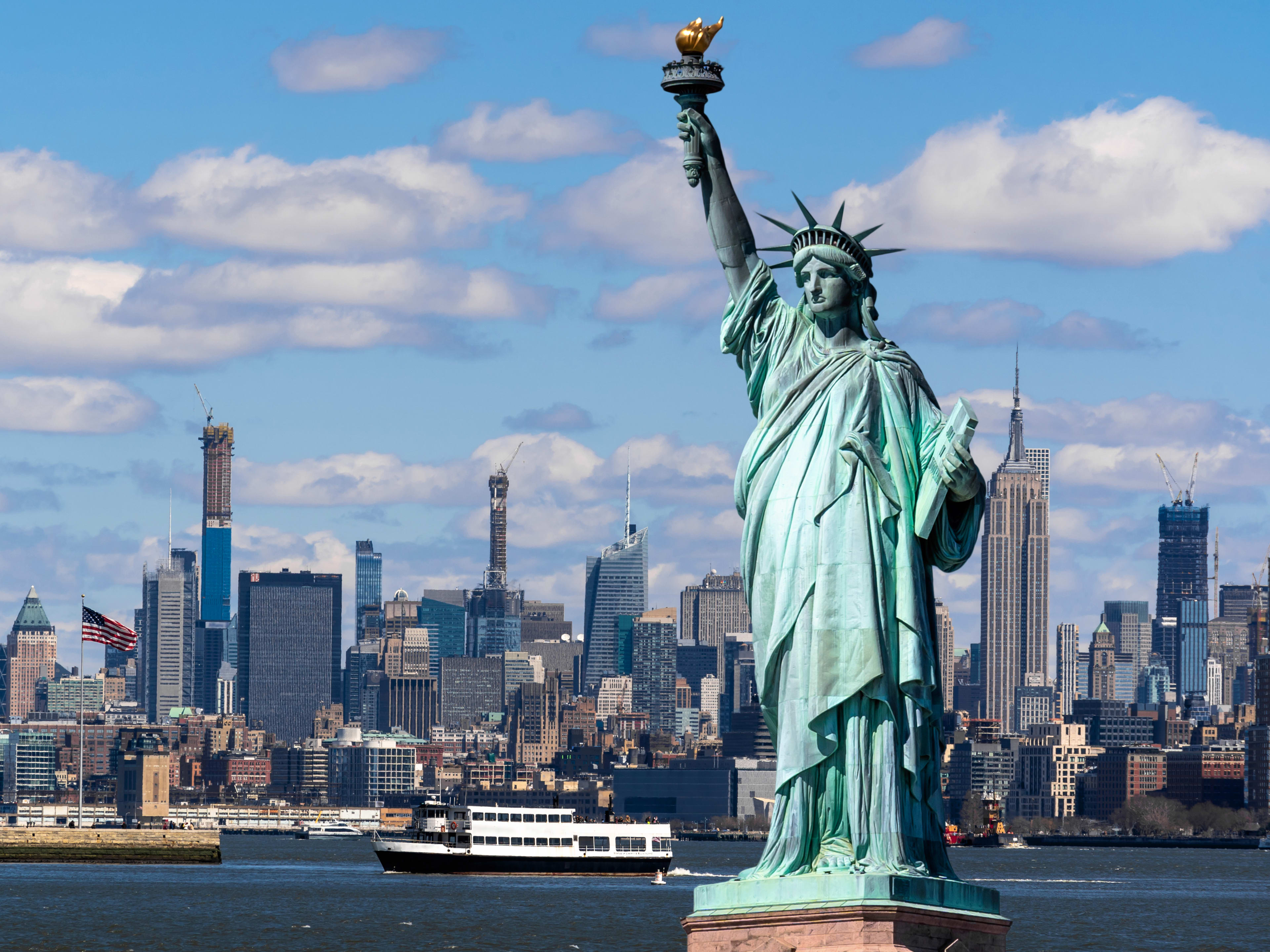
Standing proudly in New York Harbor, the Statue of Liberty has welcomed immigrants to America since 1886. This colossal neoclassical sculpture, designed by French sculptor Frédéric Auguste Bartholdi, was a gift from France to the United States. Standing 305 feet tall from ground to torch, Lady Liberty symbolizes freedom and democracy.
Visitors can take a ferry from Battery Park to Liberty Island, where they can explore the museum at the statue's base and, with advance reservations, climb to the crown for spectacular views of New York City. The nearby Ellis Island Immigration Museum provides context about the millions who passed through this gateway to America.

Grand Canyon
Carved by the Colorado River over millions of years, the Grand Canyon stretches 277 miles long, up to 18 miles wide, and reaches depths of over 6,000 feet. This massive chasm in northern Arizona exposes nearly two billion years of Earth's geological history through its layered red rock formations.
The canyon offers numerous vantage points, with the South Rim being the most accessible and popular. For the adventurous, hiking trails like Bright Angel and South Kaibab descend into the canyon, while rafting trips on the Colorado River provide a unique perspective from below. The less-visited North Rim offers a quieter experience with equally stunning views.

Mount Rushmore
Located in the Black Hills of South Dakota, Mount Rushmore National Memorial features the carved faces of four American presidents: George Washington, Thomas Jefferson, Theodore Roosevelt, and Abraham Lincoln. Completed in 1941 under the direction of sculptor Gutzon Borglum, each face measures approximately 60 feet in height.
The memorial attracts over two million visitors annually who come to admire this monumental tribute to American history and democracy. The Presidential Trail offers closer views of the sculpture, while the evening lighting ceremony provides a dramatic perspective. The nearby Crazy Horse Memorial, still under construction, will eventually be the world's largest mountain sculpture.

Golden Gate Bridge
Spanning the entrance to San Francisco Bay, the Golden Gate Bridge has been an engineering marvel and iconic symbol since its completion in 1937. This suspension bridge, painted in its distinctive "International Orange" color, stretches 1.7 miles with towers reaching 746 feet high.
Visitors can walk or bike across the bridge for panoramic views of San Francisco, the Pacific Ocean, and Alcatraz Island. Fort Point, located directly beneath the southern approach, offers a unique perspective of the bridge's underside. The Vista Points at either end provide perfect photo opportunities, particularly when fog rolls through the Golden Gate Strait.

White House
As the official residence and workplace of the President of the United States, the White House stands as a symbol of American government and democracy. Located at 1600 Pennsylvania Avenue in Washington, D.C., this neoclassical mansion has been home to every U.S. president since John Adams in 1800.
Public tours of the White House must be requested through a member of Congress and include views of the East Wing with its historic rooms and artwork. The surrounding area features the White House Visitor Center, Lafayette Square, and the Ellipse, where the annual National Christmas Tree lighting takes place.

Niagara Falls
Located on the border between New York State and Ontario, Canada, Niagara Falls comprises three waterfalls: Horseshoe Falls, American Falls, and Bridal Veil Falls. Together, they form the highest flow rate of any waterfall in North America, with more than six million cubic feet of water falling per minute during peak flow.
On the American side, visitors can experience the falls up-close at Cave of the Winds or observe from Prospect Point in Niagara Falls State Park. The Maid of the Mist boat tour, operating since 1846, takes visitors directly into the basin of Horseshoe Falls for an exhilarating experience beneath the thundering waters.

Liberty Bell
With its distinctive crack, the Liberty Bell stands as an enduring symbol of American independence. Originally cast in 1752, the bell was commissioned to mark the 50th anniversary of Pennsylvania's constitution. It gained fame when it was rung to announce the public reading of the Declaration of Independence in 1776.
Today, the Liberty Bell is housed in the Liberty Bell Center in Philadelphia's Independence National Historical Park. Visitors can see this iconic symbol up close, learning about its history and significance in American culture. The bell bears the inscription: "Proclaim Liberty Throughout All the Land Unto All the Inhabitants Thereof," a passage from Leviticus that became a rallying cry for abolitionists.

Yellowstone National Park
Established in 1872 as America's first national park, Yellowstone spans over 2.2 million acres across Wyoming, Montana, and Idaho. This vast wilderness is home to diverse ecosystems, thousands of geothermal features, and abundant wildlife including grizzly bears, wolves, and the largest public bison herd in the United States.
The park's most famous attraction is Old Faithful, a geyser that erupts approximately every 90 minutes. Other must-see features include the Grand Prismatic Spring with its rainbow-colored bacterial mat, the Grand Canyon of the Yellowstone with its dramatic waterfalls, and Mammoth Hot Springs with its terraced limestone formations.

Empire State Building
Rising 1,454 feet over Midtown Manhattan, the Empire State Building stood as the world's tallest building for nearly 40 years after its completion in 1931. This Art Deco masterpiece has featured in countless films and remains one of New York City's most recognizable landmarks.
Visitors can ascend to observation decks on the 86th and 102nd floors for spectacular 360-degree views of the city. The recently renovated visitor experience includes interactive exhibits about the building's construction and cultural significance. The tower's light displays often commemorate holidays, events, and charitable causes with different color schemes visible throughout the city.

Lincoln Memorial
Designed to resemble a Greek temple, the Lincoln Memorial honors America's 16th president with a 19-foot marble statue of Abraham Lincoln seated in contemplation. Located at the western end of the National Mall in Washington, D.C., the memorial was dedicated in 1922.
Inside, visitors find inscriptions of Lincoln's Gettysburg Address and Second Inaugural Address on the walls, while 36 columns represent the states in the Union at the time of his death. The memorial has served as the backdrop for numerous historic events, most notably Martin Luther King Jr.'s "I Have a Dream" speech during the 1963 March on Washington. The steps of the memorial offer a stunning view down the Reflecting Pool to the Washington Monument and Capitol beyond.

Frequently Asked Questions About 10 Iconic American Landmarks Everyone Should Visit At Least Once
Which of these landmarks is free to visit?
Several of these landmarks offer free or partially free access. The Lincoln Memorial, Liberty Bell, and exterior views of the White House are completely free. Grand Canyon and Yellowstone require entrance fees to the national parks, but no additional fee for viewing the attractions within. The Golden Gate Bridge is free to walk or bike across. Mount Rushmore has no entrance fee, but charges for parking.
What's the best time of year to visit these landmarks?
The ideal time varies by landmark. Summer (June-August) offers the best access to northern sites like Yellowstone and Mount Rushmore when all facilities are open. Spring (April-May) and fall (September-October) are ideal for the Grand Canyon and Niagara Falls with moderate temperatures and fewer crowds. Urban landmarks like the Statue of Liberty and Empire State Building can be visited year-round, though shoulder seasons typically have shorter lines.
How accessible are these landmarks for visitors with mobility issues?
Accessibility varies by landmark. Urban sites like the Liberty Bell, Lincoln Memorial, and parts of the Empire State Building offer good accessibility. The Statue of Liberty has wheelchair access to the museum and base, but not the crown. National parks like Grand Canyon and Yellowstone have accessible viewpoints and visitor centers, while the White House offers limited accessible tours. Always check official websites for specific accommodation information before visiting.
Are any of these landmarks UNESCO World Heritage Sites?
Yes, several of these landmarks have received UNESCO World Heritage designation. Yellowstone National Park was America's first UNESCO site, designated in 1978. The Statue of Liberty received the designation in 1984. Grand Canyon National Park was added to the list in 1979. These designations recognize their exceptional natural and cultural significance to humanity.
Can I visit all these landmarks in a single trip?
Visiting all ten landmarks in a single trip would be challenging as they're spread across the country. You could reasonably combine the New York landmarks (Statue of Liberty and Empire State Building) with relatively nearby sites like the Liberty Bell (Philadelphia) and Niagara Falls. Similarly, Washington D.C. sites (White House and Lincoln Memorial) can be visited together. Western landmarks like Yellowstone, Grand Canyon, and Golden Gate Bridge would require a separate trip due to the distances involved.
Which landmark is the most photographed in America?
The Golden Gate Bridge is often cited as the most photographed landmark in America, with the Statue of Liberty and Grand Canyon close behind. The unique orange color of the Golden Gate Bridge against the backdrop of San Francisco Bay and frequent fog conditions create iconic photo opportunities that draw photographers from around the world.


