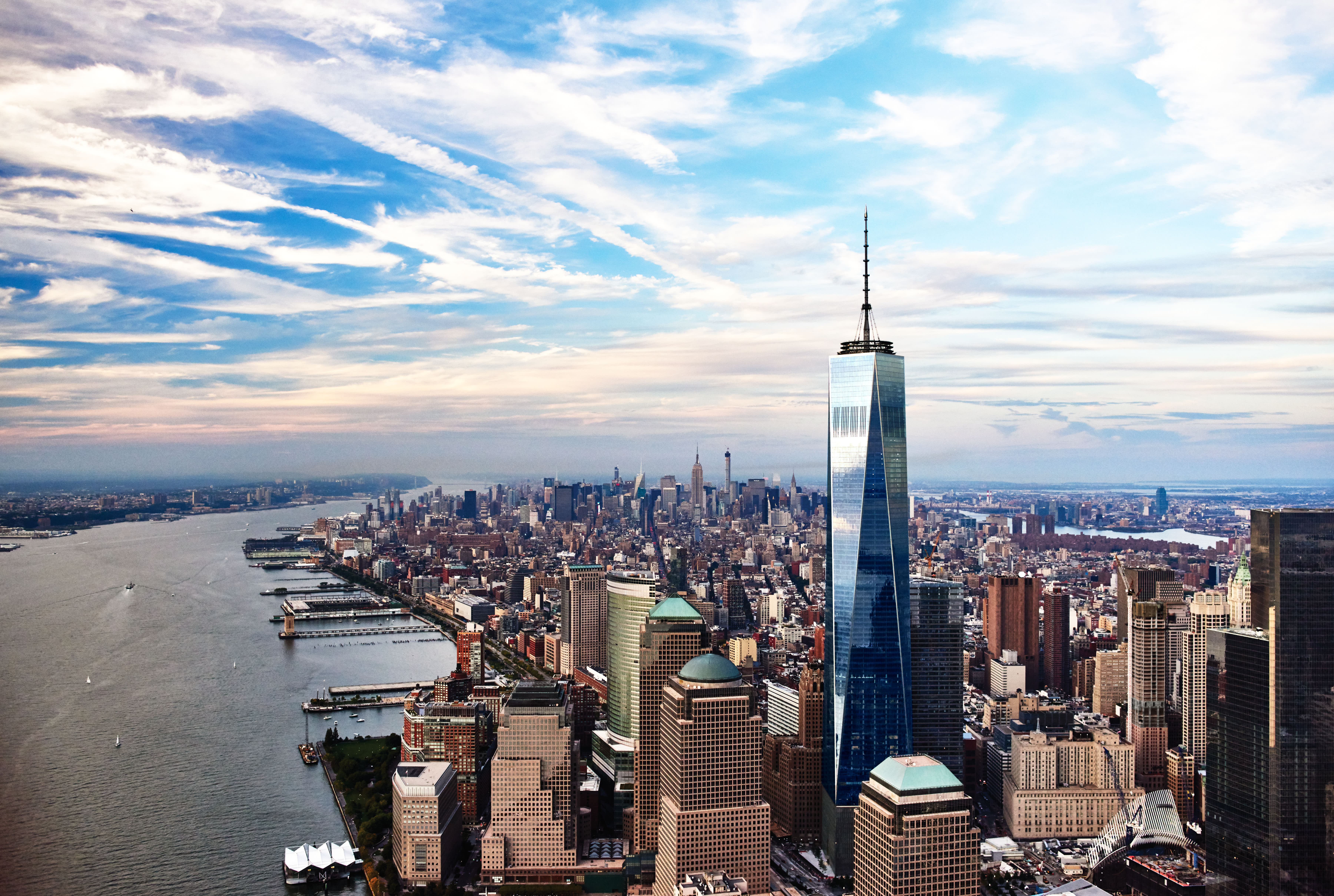
The United States pioneered the modern skyscraper and continues to push architectural boundaries with some of the world's most iconic tall buildings. From New York's One World Trade Center to Chicago's Willis Tower, these vertical marvels represent American innovation, engineering prowess, and urban identity.
The American skyline is defined by its towering skyscrapers - monuments to engineering achievement and symbols of economic prosperity. For over a century, the United States has been at the forefront of tall building construction, creating iconic structures that captivate both architects and tourists alike. These vertical marvels not only serve practical purposes as office spaces and residential buildings but also function as cultural landmarks that define the identity of major American cities.
From historic structures that pioneered new construction techniques to modern glass towers incorporating cutting-edge sustainable technologies, America's tallest buildings showcase the nation's architectural evolution and technical innovation. This exploration of the USA's tallest structures reveals how these buildings have shaped urban landscapes and continue to push the boundaries of what's structurally possible.
One World Trade Center (1,776 ft)
Standing at a symbolic 1,776 feet (representing the year of American independence), One World Trade Center in New York City currently holds the title of the tallest building in the United States. Completed in 2014, this architectural masterpiece rose from the ashes of the September 11 attacks to become a powerful symbol of resilience and renewal.
Designed by architect David Childs of Skidmore, Owings & Merrill, the building features a unique prismatic design with eight isosceles triangles forming a perfect octagon at its center. The structure incorporates numerous safety innovations, including a concrete core, extra-wide pressurized stairwells, and biological and chemical filters for the air supply.

The building's spire, which contributes to its impressive height, was a controversial element in determining its status as America's tallest building. The Council on Tall Buildings and Urban Habitat ultimately ruled that the spire was an architectural element rather than an antenna, allowing it to count toward the official height measurement.
Willis Tower (1,451 ft)
Formerly known as the Sears Tower, the Willis Tower in Chicago held the title of the tallest building in the world for nearly 25 years after its completion in 1973. Standing at 1,451 feet (1,729 feet including its antennas), this architectural icon remains the second-tallest building in the United States and a defining feature of Chicago's skyline.
The tower's innovative bundled tube structural system, designed by architectural firm Skidmore, Owings & Merrill, revolutionized skyscraper design. This approach uses nine square tubes of varying heights bundled together to resist wind forces and support the structure's weight, allowing for unprecedented height while using less steel than traditional designs.

The Willis Tower's Skydeck observation area on the 103rd floor features glass balconies extending four feet beyond the building's edge, providing visitors with the thrilling experience of standing 1,353 feet above the ground with nothing but transparent glass beneath their feet.
Empire State Building (1,250 ft)
Perhaps no American skyscraper is more culturally significant than New York City's Empire State Building. Completed in 1931 during the Great Depression, this Art Deco masterpiece stands at 1,250 feet (1,454 feet including its antenna) and held the title of world's tallest building for nearly 40 years.
What makes the Empire State Building particularly remarkable is the speed of its construction - the main structure was completed in just 410 days, an astonishing achievement even by modern standards. The building contains approximately 10 million bricks, 60,000 tons of steel, and 6,500 windows.

The Empire State Building's distinctive stepped design was partially influenced by zoning regulations requiring setbacks to allow sunlight to reach street level. This practical constraint contributed to the iconic silhouette that has made it one of the most recognizable buildings in the world, appearing in countless films and photographs.
30 Hudson Yards (1,268 ft)
Completed in 2019, 30 Hudson Yards is one of New York City's newest supertall skyscrapers, standing at 1,268 feet. As the centerpiece of the massive Hudson Yards development project on Manhattan's West Side, this glass-clad tower represents the latest generation of American skyscraper design.
The building features a dramatic angular design by Kohn Pedersen Fox Associates that tapers as it rises. Its most distinctive feature is Edge - the highest outdoor observation deck in the Western Hemisphere, extending 80 feet from the building's 100th floor and featuring a glass floor section that allows visitors to look 1,100 feet straight down to the streets below.

30 Hudson Yards employs numerous sustainable design features, including a rainwater collection system, high-efficiency mechanical systems, and a facade designed to maximize natural light while minimizing solar heat gain - representing how modern skyscrapers balance height with environmental considerations.
Bank of America Tower (1,200 ft)
The Bank of America Tower in New York City, completed in 2009, stands at 1,200 feet and represents the cutting edge of sustainable skyscraper design. It was the first commercial high-rise to achieve LEED Platinum certification, the highest rating for green buildings.
Designed by Cook+Fox Architects, the tower incorporates numerous environmental innovations, including a thermal storage system that creates ice during off-peak hours to help cool the building during the day, waterless urinals, and a system that captures rainwater for reuse. The building also utilizes translucent insulating glass in its curtain wall to maximize natural light.

The structure's concrete was produced with 45% less cement than traditional methods and incorporated slag (a byproduct of steel production) to reduce carbon emissions. These features demonstrate how modern skyscrapers can balance impressive height with environmental responsibility.
Architectural Significance of American Skyscrapers
American skyscrapers have profoundly influenced global architecture since the late 19th century when the first true skyscrapers emerged in Chicago. The Chicago School of architecture, led by pioneers like Louis Sullivan, developed the fundamental principles that would make tall buildings possible, including steel-frame construction and the use of curtain walls.
Throughout the 20th century, American skyscrapers evolved through distinct architectural movements, from the ornate Gothic Revival style of the Woolworth Building to the sleek Art Deco aesthetics of the Chrysler Building and the International Style minimalism of the Seagram Building. Each era contributed new ideas about how tall buildings could function and what they should represent visually.
Modern American skyscrapers continue this tradition of innovation, incorporating twisting forms, biophilic design elements, and increasingly sophisticated facade systems that respond to environmental conditions. Buildings like San Francisco's Salesforce Tower and Los Angeles' Wilshire Grand Center demonstrate regional variations in how tall buildings are conceived and constructed across the country.
Engineering Challenges and Solutions
Building supertall structures presents numerous engineering challenges that American architects and engineers have pioneered solutions for. Wind forces represent one of the greatest challenges - as buildings grow taller, they must withstand increasingly powerful lateral loads that can cause swaying and vibration.
Engineers have developed various strategies to counter these forces, including:
- Tuned mass dampers - massive weights suspended within buildings that counteract sway
- Tapered profiles - designs that narrow as they rise to reduce wind resistance
- Vented facades - openings that allow wind to pass through rather than push against the structure
- Outrigger systems - structural elements connecting the central core to the perimeter columns
Foundation design presents another critical challenge, especially in cities like Chicago with soft soil conditions or in New York where bedrock depth varies significantly. The caisson foundation technique, which extends support columns down to bedrock, was pioneered in Chicago and remains fundamental to skyscraper construction.
Visiting Observation Decks and Experiences
Many of America's tallest buildings offer public observation decks that provide breathtaking views and educational experiences about the structures themselves. These attractions have evolved from simple viewing platforms to immersive, high-tech experiences that attract millions of visitors annually.
The One World Observatory at One World Trade Center features a 60-second elevator ride that includes a time-lapse visualization of New York City's development over 500 years. Chicago's 360 CHICAGO in the former John Hancock Center offers TILT - a moving platform that tilts visitors outward for a thrilling downward view.
For the most adventurous visitors, several buildings now offer edge experiences that extend beyond traditional observation. The SkyDeck at Willis Tower, Edge at 30 Hudson Yards, and the Skywalk at the Grand Canyon Skywalk all feature glass floors that create the illusion of floating above the landscape below.
When planning visits to these observation decks, consider factors like weather conditions (clear days offer the best visibility), timing (sunset visits often provide spectacular lighting but are most crowded), and advance tickets (which can save significant waiting time, especially at popular destinations like the Empire State Building).
Frequently Asked Questions About 25 Iconic Tallest Buildings in the USA: Engineering Marvels Dominating American Skylines
Which building is currently the tallest in the United States?
One World Trade Center in New York City is currently the tallest building in the United States, standing at a symbolic height of 1,776 feet (including its spire). The height was specifically chosen to reference the year of American independence. It was completed in 2014 and replaced the Willis Tower (formerly Sears Tower) as America's tallest structure.
How long did the Empire State Building hold the record as the world's tallest building?
The Empire State Building held the title of world's tallest building for nearly 40 years, from its completion in 1931 until 1970 when the original World Trade Center's North Tower was completed. What makes this record even more remarkable is that the Empire State Building was constructed during the Great Depression in just 410 days, an extraordinary feat of engineering and construction efficiency.
What is the difference between architectural height and structural height?
Architectural height measures to the top of architectural elements like spires, while structural height only includes occupied floors. The Council on Tall Buildings and Urban Habitat (CTBUH) distinguishes between these measurements when ranking buildings. For example, One World Trade Center's height of 1,776 feet includes its spire, while its roof height is 1,368 feet. This distinction sometimes leads to debates about which buildings truly deserve height rankings.
Are there any new supertall buildings under construction in the USA?
Yes, several supertall buildings (defined as exceeding 984 feet) are currently under construction in the United States. Notable projects include the Central Park Tower in New York (1,550 feet), already topped out, and various projects in cities like Chicago, Los Angeles, and Miami. These new buildings typically incorporate advanced sustainability features, flexible workspace designs, and smart building technologies not found in older skyscrapers.
When is the best time to visit skyscraper observation decks?
The best time to visit skyscraper observation decks is typically weekday mornings (9-11 AM) to avoid crowds, or during sunset for spectacular lighting but with more visitors. Weather significantly impacts visibility, so check forecasts before visiting. Many observation decks now offer timed entry tickets purchased in advance online, which can substantially reduce waiting time, especially during peak tourist seasons (summer and December holidays).
How do modern skyscrapers handle wind forces and earthquake protection?
Modern skyscrapers use several technologies to handle wind forces and earthquakes. Tuned mass dampers (massive pendulums or counterweights) reduce swaying by counteracting building movement. Base isolation systems allow buildings to move somewhat independently from their foundations during earthquakes. Advanced computer modeling helps architects design aerodynamic shapes that minimize wind resistance. Some newer buildings even incorporate strategically placed openings to let wind pass through rather than push against the structure.


