
State capitol buildings stand as proud symbols of governance and architectural achievement across America. From Louisiana's towering skyscraper design to Nebraska's impressive dome, these structures not only house state governments but also showcase remarkable engineering and historical significance.
State capitols serve as the beating hearts of state governance across America, but they're also architectural wonders that showcase each state's history, ambition, and artistic vision. While all state capitols hold cultural significance, the tallest among them make particularly bold statements on their respective skylines. These impressive structures combine governmental function with remarkable design elements that have captivated visitors for generations.
From soaring art deco skyscrapers to classical domes that dominate city vistas, America's tallest state capitols represent diverse architectural styles spanning different eras of American history. Let's explore these magnificent buildings, ranked by height, and discover what makes each one special.
Louisiana State Capitol: America's Tallest
Standing at an impressive 450 feet (137 meters) tall with 34 floors, the Louisiana State Capitol in Baton Rouge easily claims the title of America's tallest state capitol building. Completed in 1932 during the Great Depression, this art deco skyscraper was the vision of controversial Governor Huey Long, who wanted to create both a symbol of state pride and a lasting monument.
Unlike the traditional domed design of many state capitols, Louisiana's building resembles a sleek office tower with elaborate stone carvings depicting the state's history. The building's observation deck offers spectacular views of Baton Rouge and the Mississippi River. Perhaps most famously, the capitol's marble corridors include the spot where Governor Long was assassinated in 1935, marked today with a bronze plaque.

Nebraska State Capitol: The Tower on the Plains
The second-tallest state capitol belongs to Nebraska, with its distinctive 400-foot tower in Lincoln. Completed in 1932 after a decade of construction, the Nebraska State Capitol pioneered the "tower on the plains" design, representing a significant departure from traditional capitol architecture.
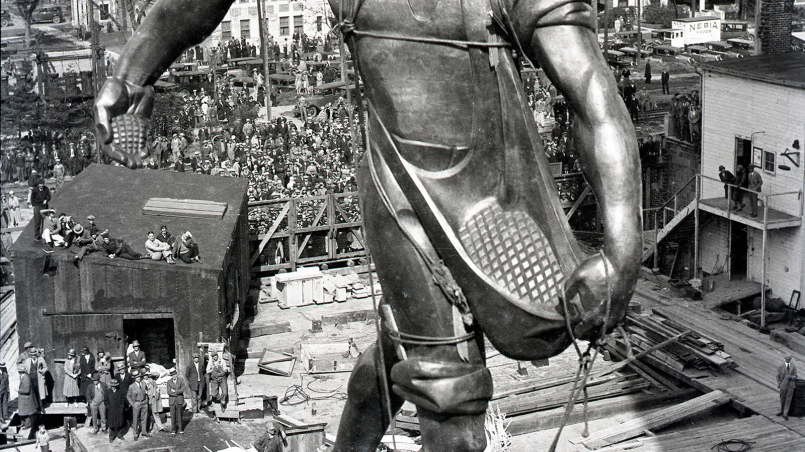
Architect Bertram Goodhue created a building that blends art deco, gothic, and classical elements. The exterior features intricate symbolic artwork and sculpture, including the famous 19-foot bronze figure "The Sower" atop the dome, representing Nebraska's agricultural heritage. Inside, visitors find stunning mosaic floors, murals depicting Nebraska history, and a unique chamber for its unicameral (single-house) legislature-the only one among all U.S. states.
Florida State Capitol: Modern Height in Tallahassee
Florida's current State Capitol in Tallahassee stands 345 feet tall and represents a modern approach to capitol design. Completed in 1977, this 22-story office tower sits behind the historic Old Capitol building, creating a striking visual contrast between Florida's governmental past and present.
The building's simple, functional design prioritizes office space for Florida's large state government. Its observation deck on the 22nd floor provides panoramic views of Tallahassee, including the historic capitol below with its distinctive red and white awnings. While lacking some of the ornate details of older capitols, Florida's modern tower efficiently serves the needs of America's third most populous state.
West Virginia State Capitol: Riverside Grandeur
The West Virginia State Capitol in Charleston rises 292 feet at its dome's peak. Designed by renowned architect Cass Gilbert (who also designed the U.S. Supreme Court building), this 1932 structure exemplifies classical revival architecture with its gleaming golden dome.
Built along the Kanawha River, the capitol features a 293-foot gold-leafed dome that's slightly larger than the U.S. Capitol dome. The building's interior showcases luxury materials including 35 varieties of marble and a 4,000-pound chandelier in the rotunda. The complex consists of a central building connected to east and west wings by corridors, creating one of America's most elegant state government centers.

Texas State Capitol: Everything's Bigger
True to the state's reputation, the Texas State Capitol in Austin makes a bold statement at 308 feet tall. When completed in 1888, it was the seventh-largest building in the world. While not the tallest state capitol by height, it remains one of the most imposing due to its massive scale and footprint.
The distinctive pink granite exterior makes this Renaissance Revival building instantly recognizable. Interestingly, the Texas Capitol is actually 14 feet taller than the U.S. Capitol in Washington, D.C.-a fact Texans proudly mention during tours. The building sits on 22 acres of meticulously landscaped grounds featuring monuments to Texas history, including tributes to the Alamo defenders and Texas Rangers.
The Rest of the Top 10 Tallest Capitol Buildings
Rounding out the top 10 tallest state capitol buildings in the United States:
- Iowa State Capitol (Des Moines): 275 feet, featuring a central dome covered in 23-karat gold leaf and four smaller domes
- Minnesota State Capitol (St. Paul): 223 feet, designed by Cass Gilbert with the second-largest self-supporting marble dome in the world
- Mississippi State Capitol (Jackson): 221 feet, with a distinctive eagle coated in gold leaf atop its dome
- Utah State Capitol (Salt Lake City): 220 feet, situated on a hill with panoramic views of the Wasatch Mountains
- Wisconsin State Capitol (Madison): 217 feet, featuring the only granite dome in the United States

Architectural Significance of Tall Capitol Buildings
The height of these capitol buildings served both practical and symbolic purposes. Practically, taller buildings allowed for more office space to accommodate growing state governments. Symbolically, height represented state pride and ambition during their construction eras.
Many of the tallest capitols were built during distinct periods of American architectural development:
- The Classical Revival period (1780s-1850s) emphasized domes inspired by ancient Rome and Greece
- The Renaissance Revival (1870s-1900s) incorporated elaborate ornamentation and imposing scale
- The Art Deco movement (1920s-1930s) introduced sleeker designs with distinctive vertical emphasis
- The Modern period (1950s-1980s) focused on functionality and efficiency
Engineering Achievements
Many of these tall capitols represented significant engineering challenges for their time. The massive domes, particularly those built before modern construction methods, required innovative solutions to support their weight and span large rotundas below. Materials ranged from traditional limestone and marble to newer materials like steel and concrete in later buildings.
Visiting America's Tallest Capitol Buildings
All state capitol buildings are open to the public with varying visiting hours. Most offer free guided tours that highlight architectural features, historical artifacts, and government functions. For those interested in architecture, photography, or American history, these buildings provide exceptional opportunities to experience important civic spaces.
The tallest capitols typically offer observation decks or dome access for visitors seeking panoramic views. Louisiana and Florida's capitols, being office-tower designs, feature dedicated observation floors with especially impressive vistas. When planning visits, check individual capitol websites for:
- Current tour schedules (many suspended or modified tours during legislative sessions)
- Special access requirements (dome tours often have limited availability)
- Photography policies (tripods may be restricted in certain areas)
- Parking information (especially important in busy downtown areas)
Whether admiring them from afar or exploring their elaborate interiors, America's tallest state capitol buildings remain powerful symbols of state identity and architectural achievement that continue to inspire visitors from around the world.
Frequently Asked Questions About 15 Tallest State Capitol Buildings in the USA: Architectural Marvels Revealed
Which state has the tallest capitol building in the United States?
Louisiana has the tallest state capitol building in the United States, standing at 450 feet (137 meters) with 34 floors. Completed in 1932 during the Great Depression, it was championed by Governor Huey Long and features an art deco skyscraper design rather than the traditional dome style seen in many other capitols.
How tall is the Texas State Capitol and how does it compare to the U.S. Capitol?
The Texas State Capitol stands 308 feet tall and is actually 14 feet taller than the U.S. Capitol in Washington, D.C. Built in 1888 of distinctive pink granite, the Texas Capitol deliberately exceeded the height of the national capitol as a point of state pride, embodying the 'everything's bigger in Texas' motto.
Can visitors access observation decks in these tall capitol buildings?
Yes, many of the tallest state capitols offer observation areas for visitors. Louisiana's capitol has an observation deck on the 27th floor with panoramic views of Baton Rouge and the Mississippi River. Florida offers a 22nd floor observation gallery, while Nebraska features a 14th floor memorial chamber with views across the plains. Most offer these experiences for free as part of public tours.
When were most of these tall capitol buildings constructed?
Many of the tallest state capitol buildings were constructed during specific architectural periods. Louisiana and Nebraska's tallest capitols were both completed in 1932 during the Art Deco era. Texas's Renaissance Revival capitol was finished in 1888, while Florida's modern tower design opened in 1977. The construction often coincided with periods of economic growth or state identity formation.
What makes the Nebraska State Capitol architecturally unique?
The Nebraska State Capitol, standing at 400 feet tall, pioneered the 'tower on the plains' design that was a significant departure from traditional dome-style capitols. Completed in 1932, it uniquely blends Art Deco, Gothic, and Classical elements. It's topped with the famous 19-foot bronze statue 'The Sower,' and houses the only unicameral (single-house) legislature among all U.S. states.
Are all state capitol buildings open to the public for tours?
Yes, all state capitol buildings offer public access, though schedules and restrictions vary. Most provide free guided tours highlighting architectural features, historical artifacts, and governmental functions. During legislative sessions, access to certain areas may be limited. Specialized tours like dome access often require advance reservations. It's recommended to check each capitol's official website before visiting for current hours and any special requirements.


