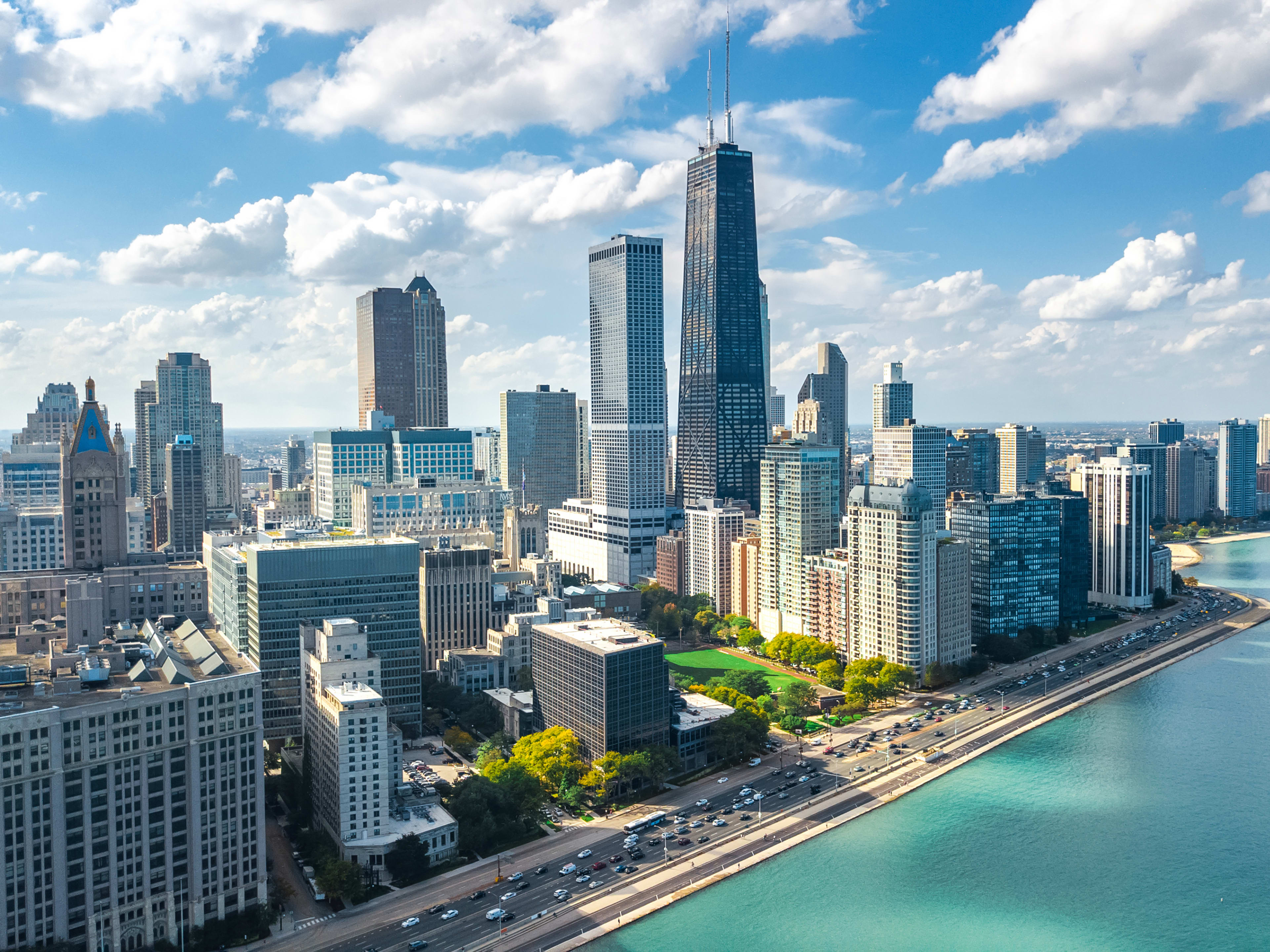
America's cities showcase an extraordinary architectural heritage spanning centuries of design innovation. From Chicago's pioneering skyscrapers to the colonial charm of Charleston, these urban centers offer breathtaking examples of diverse architectural styles that tell the story of American history and culture through their buildings.
America's cities are living museums of architectural innovation, showcasing everything from colonial masterpieces to cutting-edge contemporary designs. For architecture enthusiasts, exploring these urban landscapes offers a fascinating journey through the nation's creative heritage and cultural evolution. Each city presents its own unique architectural personality, reflecting regional influences, historical periods, and the vision of legendary architects who have shaped America's skylines.
Whether you're drawn to soaring skyscrapers, ornate historic districts, or distinctive regional styles, these ten cities stand out as essential destinations for anyone passionate about architectural design. From pioneering engineering achievements to preserved historic neighborhoods, they represent the finest examples of American architecture in all its diverse glory.
Chicago: Birthplace of the Skyscraper
Chicago earned its reputation as an architectural powerhouse after the Great Fire of 1871 created a blank canvas for innovation. The city became the birthplace of the modern skyscraper, pioneering new construction techniques that would transform urban landscapes worldwide.
The Chicago Architecture Center offers excellent walking tours covering landmarks like the Willis Tower (formerly Sears Tower), Tribune Tower, and Wrigley Building. Don't miss the opportunity to take an architecture river cruise, widely considered the best way to appreciate the city's remarkable skyline.
Frank Lloyd Wright's influence is strongly felt here, with his Prairie School style represented in the iconic Robie House. The city also boasts buildings by modernist masters like Mies van der Rohe, whose minimalist approach is perfectly captured in the sleek lines of Crown Hall at IIT.

New York City: Architectural Melting Pot
New York City's skyline stands as perhaps the world's most recognizable urban silhouette, representing over a century of architectural innovation. The city is home to iconic Art Deco masterpieces like the Chrysler Building and the Empire State Building, whose distinctive spires define the Manhattan skyline.
Beyond the famous skyscrapers, NYC offers architectural treasures in every borough. The Beaux-Arts grandeur of Grand Central Terminal, the neo-Gothic splendor of St. Patrick's Cathedral, and the cutting-edge design of newer additions like the new World Trade Center complex and the High Line showcase the city's architectural diversity.
For modern architecture enthusiasts, the Museum of Modern Art (MoMA) and the Guggenheim Museum (designed by Frank Lloyd Wright) are essential visits, not just for their collections but for their groundbreaking designs.
Savannah: Historic District Treasure
Savannah boasts America's largest National Historic Landmark District, with its distinctive grid plan centered around 22 public squares. The city's architecture represents an exceptionally well-preserved collection of 18th and 19th-century buildings, with styles ranging from Georgian and Federal to Gothic Revival and Italianate.
Forsyth Park, with its famous fountain, offers a perfect starting point for architectural exploration. The city's residential areas feature magnificent mansions like the Mercer-Williams House, made famous in "Midnight in the Garden of Good and Evil," while the waterfront area showcases historic commercial buildings that once served the cotton trade.
Savannah's architectural preservation success story makes it an ideal destination for those interested in historic urban planning and pre-Civil War southern architecture.

New Orleans: French Quarter & Creole Charm
New Orleans offers a unique architectural landscape unlike anywhere else in America, blending French, Spanish, Caribbean, and American influences. The French Quarter (Vieux Carré) features the distinctive Creole townhouses with their wrought-iron balconies, colorful facades, and hidden courtyards.
Beyond the Quarter, the Garden District showcases magnificent antebellum mansions in Greek Revival and Victorian styles. The city's famous "shotgun houses" represent a vernacular style adapted perfectly to the local climate, while Creole cottages display the practical adaptations of European designs to tropical conditions.
Distinctive architectural features like raised basements (to mitigate flooding) and galleries (covered porches) reflect how building design evolved to address the challenges of New Orleans' environment while creating the city's unmistakable aesthetic.
Miami: Art Deco Playground
Miami Beach's South Beach neighborhood contains the world's largest concentration of Art Deco architecture, with over 800 preserved buildings from the 1920s and 1930s. These structures feature the pastel colors, curved corners, and geometric patterns that define the playful Miami variation of the Art Deco style.
Ocean Drive and Collins Avenue form the heart of the Art Deco Historic District, where hotels like the Colony and the Carlyle display the distinctive Miami modern (MiMo) style. The area comes alive at night when neon lights highlight the architectural details.
Beyond South Beach, Miami showcases architectural diversity in areas like the Design District and Coconut Grove, while contemporary landmarks like the Pérez Art Museum demonstrate the city's continued architectural innovation.

Philadelphia: Colonial & Federal Heritage
As America's first UNESCO World Heritage City, Philadelphia offers exceptional examples of Colonial and Federal architecture. Independence Hall stands as the most historically significant building, where both the Declaration of Independence and Constitution were debated and signed.
The city's grid layout, planned by William Penn in the 17th century, was revolutionary for its time and influenced urban planning across America. Historic neighborhoods like Society Hill and Old City contain the nation's highest concentration of 18th and early 19th-century architecture.
Philadelphia also boasts impressive examples of Greek Revival architecture in buildings like the Second Bank of the United States, while City Hall represents one of the greatest examples of the Second Empire style in America. For modern architecture fans, Louis Kahn's masterful University of Pennsylvania buildings are must-see landmarks.
Boston: American Architectural History
Boston offers a living timeline of American architectural history, from Colonial-era treasures to bold contemporary designs. The Freedom Trail connects many of the city's historic landmarks, including the 1713 Old State House and Faneuil Hall, essential examples of early American civic architecture.
Beacon Hill represents one of America's most charming historic neighborhoods, with its Federal-style row houses, gas lamps, and brick sidewalks creating a distinctive sense of place. The Back Bay area showcases Victorian brownstones along Commonwealth Avenue, representing 19th-century urban elegance.
For contrast, Boston's more recent architectural landmarks include the dramatic concrete forms of Boston City Hall (Brutalist style) and the soaring glass of the John Hancock Tower by I.M. Pei. Trinity Church in Copley Square, designed by H.H. Richardson, stands as one of America's most significant church buildings.

Charleston: Southern Architectural Gem
Charleston's architecture tells the story of America's colonial and antebellum South through its remarkably intact historic buildings. The city's distinctive single houses feature side piazzas (porches) designed to catch sea breezes, representing a unique architectural adaptation to the coastal climate.
Rainbow Row's colorful Georgian townhouses create one of America's most photographed streetscapes, while grand mansions along The Battery showcase the wealth of pre-Civil War Charleston. Church spires dominate the low-rise skyline, earning the city its nickname, "The Holy City."
Architectural walking tours reveal hidden gardens and courtyards behind historic facades, while the distinctive Harleston Village and Ansonborough neighborhoods offer perfect examples of preserved urban historic districts.
San Francisco: Victorian Legacy
San Francisco's steep hills provide the dramatic setting for the world's largest collection of intact Victorian homes. The city's famous "Painted Ladies" near Alamo Square Park represent the colorful Queen Anne style that has become synonymous with San Francisco's architectural identity.
Beyond the Victorians, the city offers architectural treasures ranging from the Spanish Colonial Mission Dolores to the Art Deco details of the Golden Gate Bridge. The Palace of Fine Arts, with its romantic classical design, remains one of the most photographed structures in San Francisco.
Contemporary architectural highlights include the Herzog & de Meuron-designed de Young Museum in Golden Gate Park and the dramatic California Academy of Sciences by Renzo Piano, showcasing the city's commitment to innovative sustainable design.

Columbus, Indiana: Modernist Haven
Perhaps the most surprising entry on this list, Columbus, Indiana (population 50,000) boasts an extraordinary collection of modernist architecture that makes it a pilgrimage site for design enthusiasts. Thanks to the patronage of industrialist J. Irwin Miller, the city contains over 70 buildings designed by renowned architects including Eero Saarinen, I.M. Pei, Robert Venturi, and Cesar Pelli.
The First Christian Church by Eliel Saarinen marked the beginning of Columbus's architectural renaissance in 1942, while his son Eero's North Christian Church, with its distinctive spire, represents one of modernism's most distinctive religious buildings.
The Miller House and Garden, a masterpiece of mid-century modern design, showcases the collaboration between architect Eero Saarinen, designer Alexander Girard, and landscape architect Dan Kiley. The Columbus Visitors Center offers architectural tours that provide access to many of these modernist treasures.
Frequently Asked Questions About 10 Stunning US Cities Every Architecture Enthusiast Must Visit
What's the best time of year to visit these architecture-focused cities?
Spring and fall offer the most comfortable weather for walking tours in most of these cities. Chicago's architecture river cruises run from April through November. Miami is best enjoyed in winter to avoid hurricane season and extreme heat. New England cities like Boston are spectacular during fall foliage season. Consider each city's climate and plan accordingly - summer can be oppressively humid in southern cities like Charleston and New Orleans.
Are there any architecture-focused museums worth visiting in these cities?
Absolutely! The Chicago Architecture Center features models of famous skyscrapers and city planning exhibits. New York's Skyscraper Museum explores high-rise history. The National Building Museum in Washington DC (though not on our main list) offers outstanding architecture exhibitions. Many cities also have preserved historic homes functioning as museums, like the Robie House in Chicago or the Mercer-Williams House in Savannah.
Which city is best for seeing Art Deco architecture?
Miami's South Beach district contains the highest concentration of Art Deco buildings in America, with over 800 preserved structures. However, New York City offers the most iconic Art Deco skyscrapers, including the Chrysler Building and Empire State Building. For additional Art Deco exploration, consider Tulsa, Oklahoma, and Napier, New Zealand, both renowned for their Art Deco architectural heritage.
How did Columbus, Indiana become such an architectural destination despite its small size?
Columbus's architectural prominence stems from the vision of J. Irwin Miller, chairman of Cummins Engine Company. In the 1950s, Miller created a program where his foundation would pay the architect's fees for public buildings if the client selected from a pre-approved list of renowned architects. This program transformed the small Midwestern city into a laboratory for modernist design, attracting architectural talents like Eero Saarinen, I.M. Pei, and Robert Venturi, resulting in its remarkable collection of over 70 significant modernist buildings.
Which US cities are best for seeing Frank Lloyd Wright's architecture?
Chicago and its suburbs contain the largest concentration of Wright's work, including his home and studio in Oak Park and the Frederick C. Robie House. Buffalo, New York features multiple Wright designs including the Darwin D. Martin House. Spring Green, Wisconsin is home to Taliesin, Wright's personal estate. Los Angeles has several Wright homes, including the iconic Hollyhock House. Phoenix, Arizona features Taliesin West, his winter home and school. Milwaukee, Madison, and Pittsburgh also contain significant Wright buildings.


