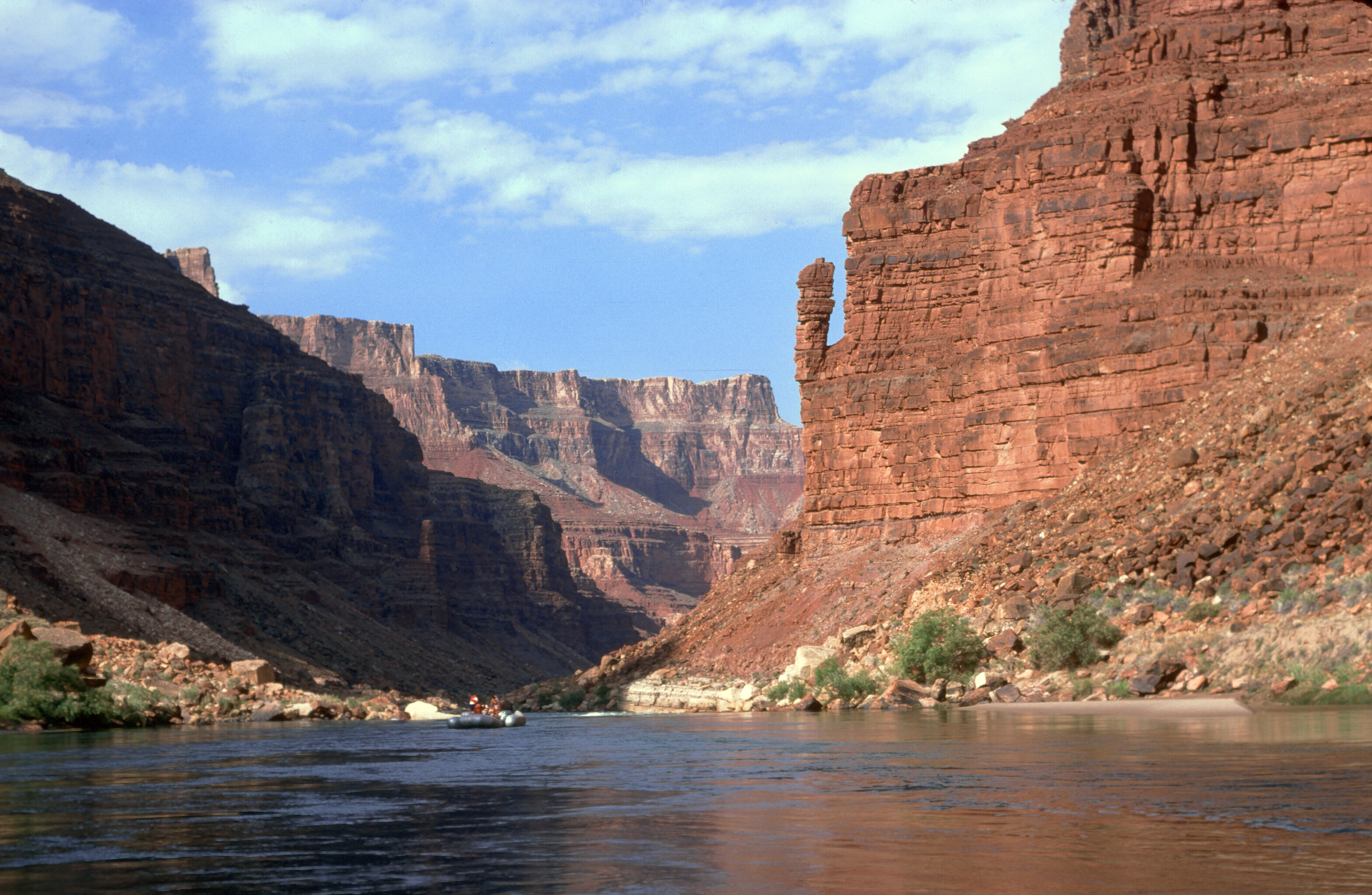
Far from highways, shopping malls, and the hustle of modern life exist America's most isolated communities. These remote towns offer a glimpse into a different way of living - one where self-sufficiency isn't just admired, but required for survival.
Nestled far beyond the reach of highways, cellular towers, and convenience stores are America's most isolated communities - towns where the modern world feels distant, and self-reliance isn't just a virtue but a necessity. These remote outposts offer a fascinating glimpse into lives lived at the edges of civilization, where residents trade convenience for solitude and forge unique relationships with the surrounding wilderness.
From the ice-bound villages of Alaska to hidden desert communities accessible only by mule, these isolated towns tell stories of resilience, independence, and a distinctive American spirit that thrives far from the urban centers where most Americans live. Let's journey to some of the most remote inhabited places in the United States.
What Makes a Town Truly Isolated?
True isolation involves more than just distance from major cities. The most isolated towns typically share several defining characteristics: they lack direct road access, require significant travel time to reach basic services, maintain limited or intermittent connections to utility grids, and often experience extreme weather conditions that can completely cut them off from the outside world.
Geographic barriers like mountains, bodies of water, or vast expanses of wilderness create natural boundaries that separate these communities from mainstream America. Many isolated towns have fewer than 100 residents and maintain their existence through strong community bonds, specialized local economies, or as service outposts for even more remote operations like mining, research, or national park administration.
Supai, Arizona: The Village Without Roads
Nestled within the Grand Canyon, Supai holds the distinction of being the only place in America where mail is still delivered by mule. Home to the Havasupai Tribe ("people of the blue-green water"), this village of approximately 200 residents can only be reached by hiking 8 miles down canyon trails, by helicopter, or by mule train.
The isolation has helped the Havasupai preserve their culture and language. The stunning turquoise waters of Havasu Creek and its waterfalls draw adventurous tourists, creating a unique economy where isolation itself has become an attraction. The community has no roads, no cars, and limited electricity, making it perhaps the most physically isolated settlement in the contiguous United States.

Utqiaġvik, Alaska: America's Northernmost Town
Formerly known as Barrow, Utqiaġvik sits at the very top of America, over 300 miles north of the Arctic Circle. With a population of about 4,500 (mostly Iñupiat Eskimo), this remote community experiences extreme polar conditions, including 65 consecutive days of darkness during winter and 82 days of uninterrupted daylight in summer.
The town is unreachable by road - all supplies must arrive by air or by sea during the brief summer window when the Arctic Ocean isn't frozen. Despite these challenges, Utqiaġvik has modern amenities including a hospital, schools, and restaurants, though at extraordinary cost. A gallon of milk can cost $10, and other groceries see similar markups due to the logistical challenges of delivery.
McGrath, Alaska: Deep in the Alaskan Interior
Located on the Kuskokwim River in Alaska's interior, McGrath (population approximately 300) exemplifies rural Alaskan isolation. The town has no road connection to Alaska's highway system and is accessible primarily by air or, in winter, by ice road. Originally a gold mining community, McGrath now serves as an important checkpoint for the Iditarod Trail Sled Dog Race.
Residents maintain a subsistence lifestyle heavily dependent on hunting, fishing, and gathering. The community maintains a small school, a clinic, and basic services, but major medical issues require air evacuation to Anchorage, potentially deadly during the frequent severe weather events that can prevent flights for days.
Monowi, Nebraska: Population 1
Perhaps America's most extreme example of isolation is Monowi, Nebraska - officially the only incorporated municipality in the United States with a population of just one person. That sole resident, Elsie Eiler (born 1934), serves as mayor, council member, treasurer, librarian, bartender, and entire citizenry rolled into one.
Elsie runs Monowi Tavern, which draws curious visitors and locals from surrounding farms. She grants herself a liquor license each year, collects taxes from herself, and maintains a 5,000-book library dedicated to her late husband. While technically not far from other small Nebraska towns, Monowi represents an extraordinary form of isolation - not by geography, but by demographic decline that has left just a single resident maintaining an entire legally incorporated town.

Tristan da Cunha: The Most Remote Settlement in the World
While not in the United States, no discussion of isolation would be complete without mentioning Tristan da Cunha. This British Overseas Territory in the South Atlantic stands as the most remote permanent settlement on Earth, located 1,500 miles from the nearest continental land in South Africa and 2,088 miles from South America.
The island's approximately 250 residents share just seven surnames and can trace their ancestry to a handful of settlers. The island has no airstrip - reaching it requires a week-long boat journey from Cape Town, South Africa. Despite this extreme isolation, the islanders have developed a functioning society with internet access (though limited), a school, and a hospital.
Point Roberts, Washington: An American Exclave
Point Roberts presents a unique case of isolation through political boundaries rather than pure geography. This five-square-mile American community of around 1,300 residents sits on the tip of a peninsula that extends from Canada but is separated from the rest of Washington State by the U.S.-Canada border.
To reach the mainland United States, residents must cross into Canada and then back into the U.S., passing through two international borders. This 25-mile journey requires passports and border crossings that can involve significant delays. During the COVID-19 pandemic, Point Roberts became even more isolated when border restrictions prevented residents from traveling through Canada, effectively cutting them off from the mainland U.S.
Stehekin, Washington: No Roads Lead Here
Tucked into the northern end of Lake Chelan in the North Cascades, Stehekin (population approximately 75) exemplifies deliberate isolation. The community has intentionally resisted road development, meaning it can only be reached by boat, floatplane, or hiking trail.
The community operates with limited electricity from a small hydroelectric facility and has spotty cell service. Residents must plan carefully for supplies, as the ferry service that delivers mail and goods runs infrequently, especially in winter. The community's bakery, famous for its cinnamon rolls, draws hikers from the Pacific Crest Trail and tourists seeking the experience of a town that has deliberately chosen to maintain its isolation.

Whittier, Alaska: The Town Under One Roof
Whittier presents one of America's most unusual approaches to isolated living. Nearly 85% of this town's approximately 300 residents live in a single 14-story building called Begich Towers, a former military facility that now houses apartments, a police station, city offices, a grocery store, and a laundromat.
The town is accessible through a 2.5-mile one-lane tunnel through a mountain that alternates direction hourly and closes overnight. During bad weather, the tunnel can close entirely, cutting off road access. The concentrated living arrangement evolved as a practical solution to the challenges of an isolated location where winter temperatures regularly plunge below freezing and winds can reach hurricane force.
Polebridge, Montana: Off-Grid at Glacier's Edge
Polebridge sits just outside Glacier National Park's northwestern boundary with about 25 year-round residents (though the population swells in summer). The town exists completely off the electrical grid, with residents relying on generators, solar panels, and other alternative energy sources.
The community centers around the historic Polebridge Mercantile and Northern Lights Saloon, which draws visitors for its famous huckleberry bear claws and rustic atmosphere. The road to Polebridge is unpaved for the final 35 miles, making winter access particularly challenging. Cell service is virtually non-existent, and residents pride themselves on their self-sufficiency and tight-knit community spirit.
Eureka, Nevada: The Loneliest Town on the Loneliest Road
Eureka (population approximately 500) sits on U.S. Route 50, famously dubbed "The Loneliest Road in America" by Life magazine in 1986. The nearest towns of any size are Austin (70 miles west) and Ely (77 miles east), with vast stretches of high desert in between.
Founded as a mining town in the 19th century, Eureka has maintained much of its historic character, including a restored opera house and courthouse. Today, the community survives through a combination of mining, ranching, and tourism from travelers curious to experience one of America's most isolated highways. The town's remoteness has preserved its distinctive Western character and historic architecture.

Lost Springs, Wyoming: Barely a Dot on the Map
With a population that has fluctuated between 1 and 4 residents in recent decades, Lost Springs is among America's tiniest incorporated towns. Located along old U.S. Route 20 in eastern Wyoming, the town consists of little more than a handful of buildings, including a post office and a bar.
The 2020 census recorded just 4 residents, making Lost Springs a case study in extreme rural depopulation. Despite its minuscule size, the town maintains its incorporation, elects a mayor, and has occasionally made headlines for its claim to be the smallest incorporated town in America (though it sometimes vies with Monowi, Nebraska for this distinction).
Yellow Pine, Idaho: Miles from Anywhere
Deep in Idaho's backcountry, Yellow Pine (population approximately 50) sits at the end of a long forest service road that becomes impassable during heavy winter snows. The nearest grocery store is in Cascade, more than two hours away on good roads - a journey that can become impossible during winter months.
The community has no cell service and limited internet. Most residents rely on generators or solar power, as the town has no central electrical service. Despite - or perhaps because of - this isolation, Yellow Pine maintains a strong community identity, hosting the Yellow Pine Music and Harmonica Festival each August, temporarily increasing the town's population tenfold.
Living in Isolation: Challenges and Rewards
Life in America's most isolated towns presents distinctive challenges: limited access to healthcare (often requiring air evacuation for emergencies), significantly higher costs for basic goods, extreme weather that can cut off all access, and psychological challenges from the isolation itself. Many residents must be jacks-of-all-trades, developing skills in everything from mechanics to medicine out of necessity.
Yet those who choose this lifestyle cite profound rewards: deeper community connections, an intimate relationship with the surrounding wilderness, freedom from many aspects of modern society, and a profound sense of self-reliance. In these communities, neighbors know and depend on each other in ways that have become increasingly rare in mainstream America.
As communications technology advances, some of these towns are experiencing changes - limited internet service has reached even some of the most remote locations, allowing for remote work possibilities that were unimaginable a generation ago. Yet true physical isolation remains, and with it, a way of life that continues to fascinate those accustomed to more connected existence.

Frequently Asked Questions About 12 Most Isolated Towns in America: Remote Living at Its Extreme
What is the most isolated town in the continental United States?
Supai, Arizona is generally considered the most isolated town in the continental United States. Located at the bottom of the Grand Canyon on the Havasupai Indian Reservation, it's the only place in America where mail is still delivered by mule. The village is inaccessible by road and can only be reached by hiking 8 miles down canyon trails, by helicopter, or by mule.
How do people in isolated towns get medical care in emergencies?
Medical care in isolated towns often relies on a combination of local clinics with basic capabilities, telemedicine, and emergency evacuation protocols. Many remote Alaskan villages have health aides with special training, but serious emergencies require air evacuation to larger hospitals, weather permitting. Some towns train multiple residents in emergency medical response, knowing that outside help may be hours or days away.
Do isolated towns have internet and cell service?
It varies greatly. Some isolated towns have surprisingly good internet through satellite services, though often with high costs and data limitations. Others have community internet centers but no residential service. Cell service remains spotty or non-existent in many truly remote locations, with towns like Yellow Pine, Idaho and Stehekin, Washington having virtually no reliable cell coverage. Satellite phones are common for emergency communications.
What jobs do people have in these remote communities?
Employment in isolated towns typically centers around natural resource industries (fishing, mining, forestry, ranching), tourism and hospitality for visitors drawn to remote experiences, government services (postal, education, land management), subsistence living (hunting/fishing supplemented by seasonal work), and increasingly, remote work via internet for those towns with sufficient connectivity. Many residents piece together multiple seasonal occupations.
How do supplies reach towns with no road access?
Supplies reach roadless communities through creative transportation networks: regular air service (often in small planes), boats or barges during ice-free seasons, winter ice roads across frozen lakes and rivers, snowmobile freight delivery, and in some cases like Supai, Arizona, mule trains. Residents typically order in bulk and plan carefully around delivery schedules, which can be disrupted for days or weeks by weather events.
What happens when severe weather strikes these isolated towns?
Isolated communities are built on preparedness. Residents stockpile essential supplies, fuel, and shelf-stable food. Many homes maintain generators and alternative heating methods. Communities develop emergency protocols for sharing resources. During extended isolation from weather events, towns may ration supplies and implement emergency communication systems. Medical emergencies during these periods can be particularly dangerous if evacuation is impossible.


