Massachusetts has nearly half its adults holding a college degree. West Virginia has no universities in the national top 500. Between those two extremes lies a 50-state story about money, geography, migration, and the choices states make about their schools.
If you wanted to design the most educated state in America from scratch, you'd probably end up with something that looks a lot like Massachusetts. Anchor it with a cluster of elite universities. Build a knowledge economy around them that keeps graduates local. Fund the public schools well enough that even kids who don't go to Harvard get a decent start. Then watch the cycle reinforce itself for a century or so.
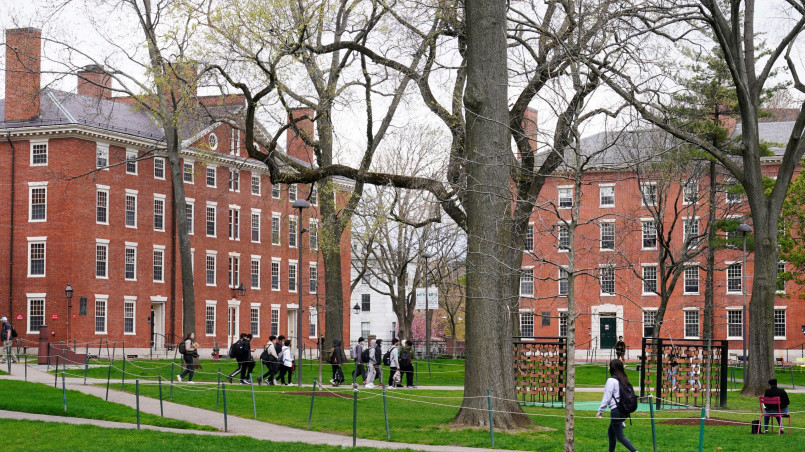
That's roughly what happened. Massachusetts ranks first in the country for education in 2026, with a score of 78.41 out of 100, nearly seven points ahead of second-place Vermont. More than 47% of adults 25 and older hold at least a bachelor's degree, the highest share in the nation. Nearly 22% have a graduate or professional degree, also the highest. Its public schools rank second in the country, and its NAEP math and reading scores are the best of any state.
The other 49 states are playing catch-up, and the gap at the bottom is striking: West Virginia scores just 24.35, has no universities in the national top 500, and ranks last in both educational attainment and school quality. That's not just a statistical abstraction. It shapes who moves there, what employers locate there, and what opportunities residents have access to.
Who Leads, and Why Massachusetts Is Hard to Beat
Massachusetts doesn't just have Harvard and MIT. Those schools matter, but they're the tip of an iceberg. The state also has Tufts, Boston University, Northeastern, Brandeis, Williams, Amherst, and dozens of others. The density of higher education in eastern Massachusetts is unlike anywhere else in the country. Graduates don't leave because they don't have to. The job market created by all those universities and the companies that orbit them keeps talent local.
That retention effect shows up in the numbers. The 47% bachelor's degree rate isn't driven by kids leaving for better schools elsewhere and coming back. It's driven by people staying. The state also has a free community college program and strong K-12 funding, which means the pipeline is well-fed from both ends.
Vermont takes second place with a score of 75.35, which might seem surprising for a small, rural state. But Vermont has one specific number that stands out: 95% of its residents 25 and older have at least a high school diploma, the highest rate in the country. It's not a university hub, but it's a state where basic educational completion is nearly universal, and about 44% of adults have a bachelor's degree.

Maryland comes in third, and it earns the ranking differently: it ranks first in quality of education nationally (meaning its schools actually perform well) and third in attainment. About 17.6% of Maryland adults have graduate or professional degrees, second only to Massachusetts. The proximity to Washington D.C. and the federal government's concentration of high-credential jobs creates relentless demand for advanced degrees that the state's education system has learned to supply.
The Northeast Cluster
States 1 through 8 are almost entirely in the Northeast: Massachusetts, Vermont, Maryland, Connecticut, New Jersey, Virginia, New Hampshire. What they share: old money, high property taxes that fund well-resourced public schools, dense university ecosystems, and knowledge-sector economies that reward credentials.
Connecticut's 4th-place ranking reflects all of these: 38.9% bachelor's degree rate, universities that rank 3rd in the nation, 17% of adults with graduate degrees. New Jersey at 6th shows how proximity to great cities can substitute for having world-class institutions within your own borders. Many New Jersey residents who work in New York or Philadelphia hold degrees from institutions there, yet they're counted in New Jersey's attainment numbers.
Minnesota and Washington break the regional pattern to round out the top 10. Minnesota's 9th-place ranking reflects a diversified economy with a strong healthcare and finance sector that draws and keeps degree holders in the Twin Cities. Washington at 10th benefits from the same dynamic Colorado enjoys, a tech economy centered on Seattle that has attracted enormous numbers of educated workers over the past two decades.
The Colorado Paradox
Colorado ranks 5th overall, and the score alone doesn't capture the interesting story behind it. Its educational attainment rank is 2nd in the country, with 39.4% of adults holding a bachelor's degree. But its quality of education rank is 38th. How does a state with the second-highest degree-holding rate in the country have schools that rank in the bottom third for quality?

The answer is migration. Colorado imports educated people rather than producing them. The state has spent decades attracting tech workers, outdoor recreation enthusiasts, and remote workers, many of them already carrying degrees from universities elsewhere. Those people land in Colorado, get counted in the attainment statistics, but they didn't go through Colorado's school system to get there.
It's a meaningful distinction: Massachusetts earns its rank, Colorado partially borrows it. If Colorado stopped attracting transplants tomorrow, its attainment numbers would drift toward the middle over a generation. It's still a genuinely educated state, but the high school in Pueblo isn't why.
Florida: Great Schools, Low Degrees
Florida is the mirror image of Colorado. Its quality of education ranks 5th in the country, genuinely impressive, reflecting real school performance. But its educational attainment ranks 35th, pulling its overall position down to 21st. Florida has good schools that produce graduates who then, for the most part, go somewhere else.
Part of this is demographic. Florida has one of the largest retiree populations in the country, people who completed their education decades ago, when bachelor's degree rates were lower nationally, and who moved to Florida for the climate and cost of living. They dilute the adult degree-holding percentage without saying anything about the quality of Florida's current schools.

Part of it is also outmigration. Florida generates a lot of graduates, but a significant share leave for higher-wage markets in the Northeast and on the West Coast. The state builds human capital that other places harvest, a common pattern in the Sun Belt, where affordability attracts retirees and young families but strong career markets can be harder to find.
The Bottom of the List
The bottom ten states are concentrated in the South, with West Virginia isolated at the very end. Its score of 24.35 is barely one-third of Massachusetts's figure. It ranks 50th in attainment, 45th in quality, and has no institutions in the national top 500 universities. That last point matters more than it might seem: without a flagship research university pulling in federal grants, attracting faculty, and spinning off companies, there's no anchor for a knowledge economy. The best students leave, and there's not enough to bring them back.

Mississippi (49th), Louisiana (48th), Arkansas (47th), and Nevada (46th) follow close behind. Nevada's position is worth a specific note: the state ranks dead last, 50th in school quality, despite having a middling attainment score. Rapid population growth, high student mobility in Las Vegas, and chronic difficulty recruiting and retaining teachers have created a school system that consistently underperforms what the state's tax base could theoretically support.
Oklahoma's 45th ranking generated controversy when local reporters examined the methodology. The state requires all 11th graders to take the ACT, which is unusual: most states only see college-bound students take it voluntarily. That self-selection inflates average scores for states with voluntary testing, since the students who skip it are typically less academically prepared. Oklahoma's universal testing policy means everyone sits for the exam, which drags the state average down and makes it look worse than a direct comparison of similarly prepared students would suggest. It's a real methodological problem that the rankings don't fully account for.
What Actually Drives These Rankings
The honest answer is that education levels are mostly downstream of economics, not the other way around. States with high incomes generate more property tax revenue, which funds good public schools. Good public schools produce more college-bound graduates. More graduates attract employers who want credentialed workers. Those employers pay high wages. Higher wages generate more tax revenue. The cycle compounds over decades.
The research bears this out. States whose workforces concentrate in knowledge-sector jobs experience shallower job losses during recessions and faster recoveries. Education is both a product of economic strength and a driver of it, which is why these rankings are remarkably stable year to year. Breaking in from the bottom requires either a massive external investment or a structural shift in the local economy that takes a generation to show up in the numbers.
Migration matters too, as Colorado and Washington illustrate. States that attract remote workers or tech transplants can move their attainment numbers without their schools improving at all. States that export their graduates to higher-cost markets see the opposite: their schools produce capable people who contribute to someone else's statistics.
All 50 States Ranked
Rankings use a 100-point scale across 18 metrics in two categories: educational attainment (degree-holding rates among adults 25+) and quality of education (school performance, test scores, university rankings, and graduation rates). Source: WalletHub 2026.
| # | State | Score | Attainment Rank | Quality Rank |
|---|---|---|---|---|
| 1 | Massachusetts | 78.41 | #1 | #3 |
| 2 | Vermont | 75.35 | #2 | #12 |
| 3 | Maryland | 74.01 | #3 | #1 |
| 4 | Connecticut | 72.68 | #4 | #5 |
| 5 | Colorado | 69.82 | #2 | #38 |
| 6 | New Jersey | 68.45 | #10 | #4 |
| 7 | Virginia | 67.50 | #7 | #7 |
| 8 | New Hampshire | 67.03 | #5 | #14 |
| 9 | Minnesota | 63.88 | #8 | #6 |
| 10 | Washington | 63.69 | #9 | #11 |
| 11 | Utah | 60.29 | #11 | #26 |
| 12 | Maine | 59.95 | #13 | #17 |
| 13 | Rhode Island | 58.93 | #16 | #23 |
| 14 | Delaware | 57.26 | #17 | #16 |
| 15 | Illinois | 56.41 | #15 | #18 |
| 16 | New York | 55.80 | #18 | #3 |
| 17 | Pennsylvania | 54.90 | #19 | #12 |
| 18 | Wisconsin | 54.10 | #14 | #13 |
| 19 | Iowa | 53.50 | #12 | #20 |
| 20 | Kansas | 52.90 | #20 | #24 |
| 21 | Florida | 52.00 | #35 | #5 |
| 22 | Oregon | 51.40 | #22 | #28 |
| 23 | Nebraska | 50.80 | #21 | #22 |
| 24 | Montana | 50.10 | #23 | #19 |
| 25 | North Dakota | 49.50 | #25 | #21 |
| 26 | Wyoming | 48.90 | #24 | #14 |
| 27 | Ohio | 48.20 | #27 | #29 |
| 28 | California | 47.60 | #29 | #25 |
| 29 | Georgia | 47.00 | #30 | #33 |
| 30 | North Carolina | 46.40 | #28 | #36 |
| 31 | Missouri | 45.80 | #32 | #31 |
| 32 | Michigan | 45.20 | #33 | #27 |
| 33 | South Dakota | 44.60 | #26 | #29 |
| 34 | Hawaii | 44.00 | #31 | #32 |
| 35 | Arizona | 43.40 | #34 | #47 |
| 36 | Alaska | 42.80 | #36 | #43 |
| 37 | Idaho | 42.20 | #37 | #40 |
| 38 | South Carolina | 41.60 | #38 | #41 |
| 39 | Tennessee | 41.00 | #39 | #39 |
| 40 | Indiana | 40.40 | #40 | #30 |
| 41 | Texas | 39.98 | #41 | #35 |
| 42 | New Mexico | 37.05 | #42 | #49 |
| 43 | Alabama | 35.73 | #43 | #42 |
| 44 | Kentucky | 34.71 | #44 | #34 |
| 45 | Oklahoma | 33.87 | #45 | #45 |
| 46 | Nevada | 33.01 | #46 | #50 |
| 47 | Arkansas | 29.84 | #47 | #37 |
| 48 | Louisiana | 28.13 | #48 | #40 |
| 49 | Mississippi | 26.00 | #49 | #48 |
| 50 | West Virginia | 24.35 | #50 | #45 |


