
For decades, Area 51 remained one of America's most closely guarded secrets, shrouded in mystery and conspiracy theories. But declassified CIA documents have finally revealed the truth about this remote Nevada facility. From revolutionary spy planes to Cold War innovations, these seven facts expose what really happened behind the barbed wire and what the government worked so hard to keep hidden from the public eye.
For over half a century, the U.S. government refused to acknowledge that Area 51 even existed. Located in the remote Nevada desert, this highly classified facility became the subject of countless conspiracy theories, alien folklore, and Hollywood fantasies. But the reality of Area 51 is arguably more fascinating than fiction.
Thanks to declassified CIA documents released in recent years, we now know the truth about what really happened at this secretive installation. These revelations expose decades of cutting-edge aviation technology, Cold War espionage operations, and the lengths to which the government went to protect national security secrets. Here are seven declassified facts that were kept hidden from the public for decades.
The CIA Finally Acknowledged Area 51's Existence in 2013
In August 2013, the CIA officially acknowledged the existence of Area 51 for the first time in response to a Freedom of Information Act (FOIA) request filed by researcher Jeffrey T. Richelson. The agency released a 408-page document that detailed the history of the U-2 spy plane program and explicitly mentioned "Area 51" by name.

Prior to this admission, the government maintained a policy of neither confirming nor denying the facility's existence, despite it being common knowledge among aviation enthusiasts and conspiracy theorists. The declassified documents revealed that Area 51 served as a testing ground for reconnaissance aircraft during the Cold War, not as an alien research facility as popular culture suggested.
The acknowledgment came with heavily redacted sections, meaning many aspects of current operations at the base remain classified. The facility continues to be off-limits to the public, with restricted airspace extending for miles around the installation.
Area 51 Was the Birthplace of the U-2 Spy Plane
The primary reason for Area 51's creation was the development of the U-2 reconnaissance aircraft in the mid-1950s. President Eisenhower approved the top-secret program to gather intelligence on Soviet military capabilities during the height of the Cold War.
Lockheed Aircraft Corporation's Skunk Works division, led by legendary engineer Clarence "Kelly" Johnson, needed an extremely remote location to test the revolutionary aircraft. The U-2 could fly at altitudes exceeding 70,000 feet-far higher than any other aircraft of its time-making it virtually immune to Soviet interceptors and surface-to-air missiles.

The first U-2 test flight took place at Area 51 in August 1955. The aircraft's unprecedented altitude capabilities allowed the United States to photograph Soviet military installations, nuclear facilities, and missile sites with remarkable clarity. U-2 missions provided critical intelligence that shaped American foreign policy throughout the Cold War, including during the Cuban Missile Crisis in 1962.
Why the U-2 Required Extreme Secrecy
The U-2 program violated international law by flying reconnaissance missions over sovereign nations without permission. If the Soviets discovered the program's existence, it could have escalated Cold War tensions dramatically. The secrecy surrounding Area 51 was therefore a matter of national security and diplomatic necessity.
UFO Sightings Were Actually Classified Aircraft Tests
One of the most intriguing revelations from declassified documents is that the CIA was fully aware that classified aircraft tests were responsible for many UFO sightings during the 1950s and 1960s. Commercial airline pilots and civilians frequently reported seeing mysterious objects flying at impossible altitudes, often reflecting sunlight in unusual ways.
According to CIA historian Gerald K. Haines, more than half of all UFO reports from the late 1950s and 1960s were actually sightings of U-2 and later A-12 OXCART aircraft. At the time, commercial airliners flew at altitudes of 10,000 to 20,000 feet, while military aircraft operated at 40,000 feet. When pilots spotted aircraft flying at 60,000 feet or higher, they had no frame of reference for what they were seeing.

The government chose not to correct these UFO reports because doing so would have revealed the existence of classified reconnaissance programs. Instead, the Air Force's Project Blue Book investigated UFO sightings while carefully avoiding any connection to Area 51 operations. This deliberate misdirection fueled decades of alien conspiracy theories.
The Secret OXCART Program Developed the A-12 Reconnaissance Plane
Following the success of the U-2, the CIA commissioned an even more ambitious project: the A-12 OXCART, the precursor to the famous SR-71 Blackbird. This aircraft could fly at speeds exceeding Mach 3 (over 2,200 mph) at altitudes above 90,000 feet, making it the fastest and highest-flying aircraft of its era.
Development of the A-12 took place at Area 51 beginning in 1959 under a project codenamed OXCART. The aircraft featured revolutionary design elements including a titanium fuselage to withstand the extreme heat generated by flying at Mach 3, and radar-absorbing materials that made it one of the world's first stealth aircraft.

The first A-12 test flight occurred in April 1962, and the program remained classified until the 1990s. During its operational life, A-12 aircraft flew reconnaissance missions over North Vietnam, North Korea, and other hostile territories, gathering intelligence that conventional aircraft could never obtain safely.
Technological Innovations Born at Area 51
The OXCART program pushed the boundaries of aviation technology, requiring innovations in materials science, aerodynamics, and propulsion systems. Many of these advances later found applications in commercial aviation and space exploration, though their origins at Area 51 remained secret for decades.
Area 51 Housed and Tested Stolen Soviet Aircraft
Declassified documents reveal that Area 51 served as the primary facility for testing captured and stolen Soviet aircraft during the Cold War. The program, codenamed "Have Doughnut," began when the U.S. acquired a Soviet MiG-21 fighter jet and needed a secure location to evaluate its capabilities.
American pilots flew these Soviet aircraft extensively to understand their strengths, weaknesses, and combat tactics. This intelligence proved invaluable during the Vietnam War, where U.S. fighter pilots faced MiG aircraft in aerial combat. Training programs at Area 51 allowed American aviators to practice against actual Soviet fighters, giving them a decisive advantage.
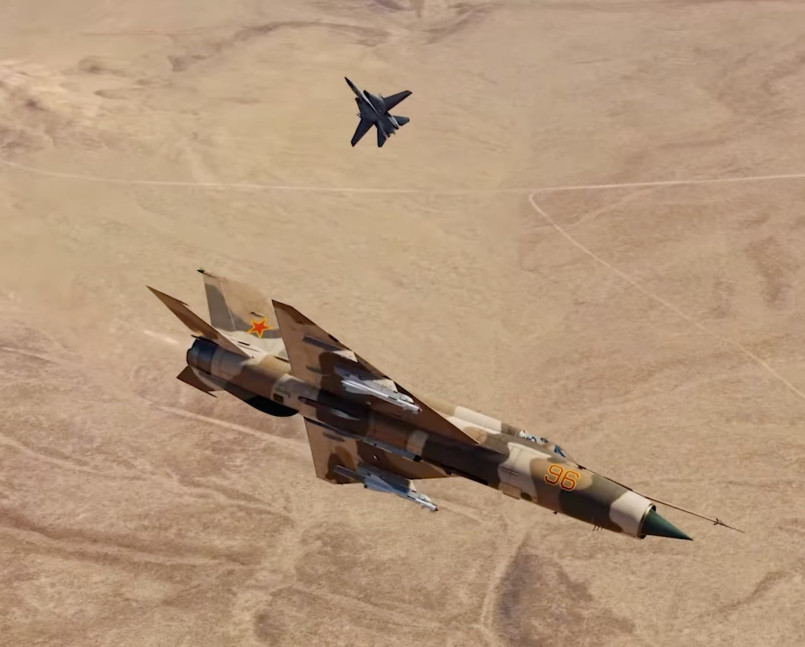
The facility eventually housed an entire collection of Soviet aircraft, including various MiG models and other Eastern Bloc aircraft obtained through defections, covert operations, and third-party acquisitions. This collection, nicknamed the "Red Eagles" squadron, remained one of Area 51's most closely guarded secrets until declassification in the 2000s.
The Remote Groom Lake Location Was Chosen by Design
Area 51's location at Groom Lake, Nevada, was selected specifically for its extreme remoteness and natural security features. In 1955, Kelly Johnson flew over the area with test pilot Tony LeVier and immediately recognized its potential as a secret test facility.
The site offered several strategic advantages: it was adjacent to the Nevada Test Site where nuclear weapons were tested, meaning the area was already restricted and heavily guarded. The dry lakebed provided a natural runway suitable for experimental aircraft. Surrounding mountains created a natural barrier that concealed activities from ground-level observation.

The facility sits approximately 83 miles northwest of Las Vegas, far enough from population centers to maintain secrecy but close enough to access supplies and personnel. The restricted airspace designation, known as "R-4808N," prohibits all civilian and most military aircraft from entering the area, with violators subject to interception by armed fighter jets.
Expansion Over the Decades
What began as a small testing facility with a few buildings and a dirt runway has expanded into a massive installation with multiple runways (including one nearly 12,000 feet long), dozens of buildings, and underground facilities. Satellite imagery shows continuous expansion and construction, suggesting that Area 51 remains active in developing classified aerospace technology.
Workers Were Sworn to Secrecy Under Threat of Imprisonment
Declassified accounts from Area 51 workers reveal the extraordinary secrecy measures imposed on employees. Workers signed security oaths that legally prohibited them from discussing their work, even with family members, under threat of prosecution for violating the Espionage Act.
Employees were transported to the facility on unmarked aircraft known as "Janet flights" that departed from a dedicated terminal at Las Vegas's McCarran Airport. Windows on these planes were sometimes covered to prevent workers from identifying the exact location of the base. Even within Area 51, workers were compartmentalized, with most employees knowing only about their specific project.

The secrecy extended to families who often had no idea where their loved ones worked or what they did. Many Area 51 veterans carried these secrets for decades, only speaking publicly after their work was declassified or they received explicit permission from the government.
The Human Cost of Secrecy
Some former workers have reported that the extreme secrecy prevented them from receiving proper recognition for their contributions to national security. Others faced health issues from exposure to hazardous materials but couldn't seek compensation because acknowledging their work would violate security oaths. It wasn't until the CIA's 2013 admission that many veterans could finally discuss their roles in America's most secret aviation programs.
These seven declassified facts reveal that Area 51's real history is a story of technological innovation, Cold War strategy, and extraordinary secrecy. While the facility continues to operate today with classified projects that may not be revealed for decades, these revelations provide a fascinating glimpse into America's most mysterious military installation.


