Social Security touches nearly every American's life, yet few truly understand how it works. From the payroll taxes deducted from your paycheck to the monthly checks retirees receive, the system is more complex than most realize. This comprehensive guide reveals the mechanisms behind America's largest social insurance program, explaining eligibility requirements, benefit calculations, funding sources, and strategies to maximize your retirement income.
Social Security stands as one of America's most significant government programs, yet it remains widely misunderstood. More than 67 million Americans receive Social Security benefits each month, totaling over $1.4 trillion annually. Whether you're just starting your career or approaching retirement, understanding how this system works is essential for your financial future.
The program operates as a social insurance system rather than a traditional savings account. Workers pay into the system throughout their careers, earning credits that qualify them for benefits during retirement, disability, or for their survivors after death. Despite common misconceptions, your Social Security taxes don't sit in a personal account-they fund current beneficiaries while building your future entitlement.

What Is Social Security
Established in 1935 during the Great Depression, Social Security was designed to provide economic security for older Americans and prevent widespread poverty among retirees. President Franklin D. Roosevelt signed the Social Security Act into law, creating a system where workers would contribute during their working years and receive benefits in retirement.
The official name is Old-Age, Survivors, and Disability Insurance (OASDI). This umbrella term encompasses three primary programs: retirement benefits for workers and their families, survivor benefits for families of deceased workers, and disability benefits for workers who become unable to work. Additionally, the Supplemental Security Income (SSI) program provides assistance to disabled adults and children with limited income.
Social Security operates on a pay-as-you-go system, meaning current workers' taxes fund benefits for current recipients. This intergenerational transfer distinguishes Social Security from private retirement accounts where your contributions grow specifically for your future use.
How Funding Works
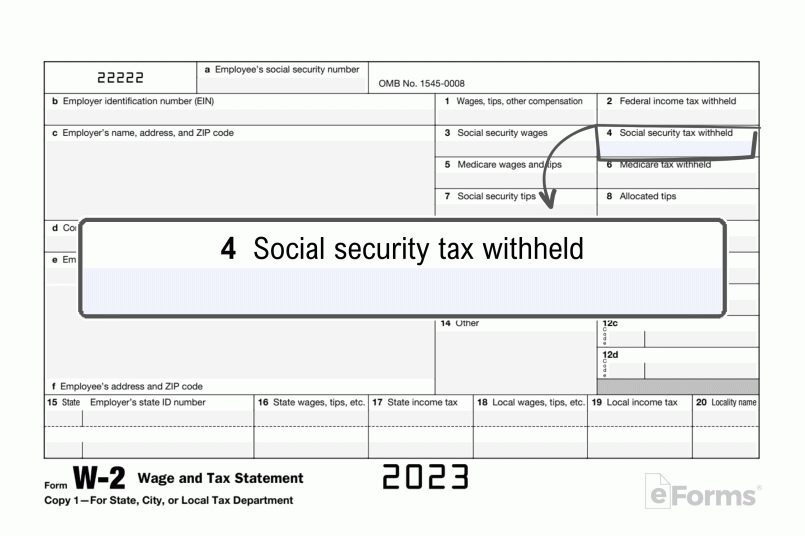
Social Security receives funding primarily through payroll taxes under the Federal Insurance Contributions Act (FICA). If you're an employee, you pay 6.2% of your earnings for Social Security and 1.45% for Medicare, with your employer matching these contributions. Self-employed individuals pay the full 12.4% for Social Security and 2.9% for Medicare through the Self-Employment Contributions Act (SECA).
However, these taxes don't apply to unlimited income. In 2024, only earnings up to $168,600 are subject to Social Security taxes-this figure is called the taxable maximum or wage base, and it increases most years with average wage growth. Medicare taxes, by contrast, apply to all earnings with an additional 0.9% tax on high earners.

The collected funds flow into two trust funds: the Old-Age and Survivors Insurance (OASI) Trust Fund and the Disability Insurance (DI) Trust Fund. These aren't typical bank accounts-the money gets invested in special-issue U.S. Treasury securities that earn interest. When benefit payments exceed tax income, the trust funds redeem these securities to cover the shortfall.
Additional revenue sources include taxation of Social Security benefits themselves and interest earned on the trust fund investments. Some beneficiaries with substantial additional income must pay federal income tax on a portion of their Social Security benefits, and this tax revenue returns to the trust funds.
Earning Work Credits
To qualify for Social Security retirement benefits, you must earn 40 work credits, equivalent to 10 years of work. In 2024, you earn one credit for each $1,730 in covered earnings, with a maximum of four credits per year regardless of when during the year you earn the income.
These credits stay with you permanently-you never lose credits even if you stop working or switch jobs. This system protects workers who take breaks from the workforce for caregiving, education, or other reasons. However, the amount of your eventual benefit depends not just on having 40 credits but on your lifetime earnings history.
Certain types of work don't count toward Social Security credits. Some state and local government employees who participate in their own pension systems may not pay into Social Security. Additionally, wages under the table or from employers who don't properly report earnings won't generate credits-one reason why proper tax filing matters for your future retirement security.
Types of Benefits
Social Security provides several distinct benefit types, each serving different populations:
Retirement benefits represent the program's largest component, paying monthly benefits to workers who have earned sufficient credits and reached eligibility age. The earliest you can claim retirement benefits is age 62, though your benefit amount increases if you delay claiming.

Disability benefits provide income to workers who develop serious medical conditions that prevent them from working. Unlike some disability programs, Social Security Disability Insurance (SSDI) requires that your condition be expected to last at least one year or result in death, and you must be unable to perform substantial gainful activity.
Survivor benefits go to family members when a worker dies. Eligible survivors may include widows and widowers, divorced spouses who were married at least 10 years, children under 18 (or under 19 if still in high school), and dependent parents aged 62 or older.
Family benefits allow certain family members to collect benefits based on your work record even while you're alive. Your spouse, minor children, and adult children who became disabled before age 22 may qualify for benefits when you claim retirement or disability benefits.
Calculating Your Benefits
Social Security benefit calculation follows a complex but logical process. The Social Security Administration examines your 35 highest-earning years, adjusting past earnings for wage inflation to create an apples-to-apples comparison across decades.
If you worked fewer than 35 years, zeros fill the remaining years, which significantly reduces your benefit. This is why continuing to work-or returning to work-can increase benefits if your current earnings exceed those from earlier low-earning years in your top 35.
The SSA calculates your Average Indexed Monthly Earnings (AIME) by dividing your indexed earnings over 35 years by 420 (the number of months in 35 years). Then they apply a formula to your AIME to determine your Primary Insurance Amount (PIA)-the benefit you'd receive at your Full Retirement Age.
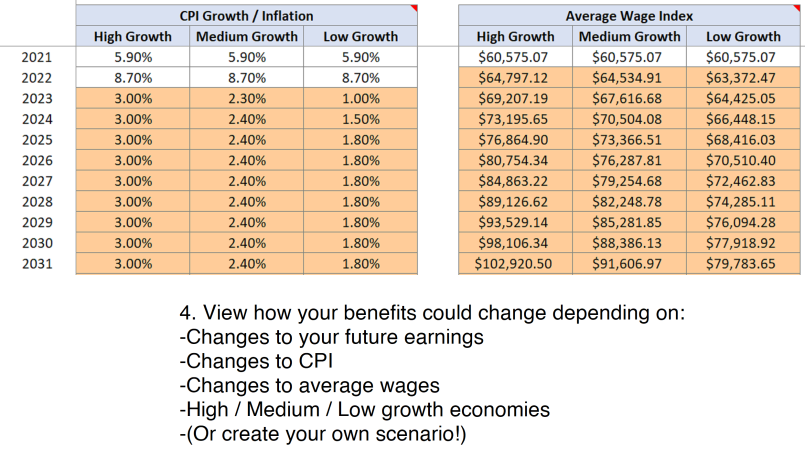
The PIA formula is progressive, meaning it replaces a higher percentage of earnings for lower-income workers. In 2024, the formula replaces 90% of the first $1,174 of AIME, 32% of AIME between $1,174 and $7,078, and 15% of AIME above that amount. This structure ensures Social Security provides relatively more support to workers who earned less during their careers.
Your actual benefit depends on when you claim. The PIA represents what you'd receive at Full Retirement Age (FRA), which ranges from 66 to 67 depending on your birth year. Claiming earlier reduces your benefit permanently, while delaying increases it.
Claiming Age Decisions
One of the most crucial Social Security decisions involves when to start collecting benefits. You can begin as early as age 62 or delay until age 70, with significantly different monthly amounts depending on your choice.
Claiming at 62 means accepting a permanent reduction in benefits. If your FRA is 67, claiming at 62 reduces your benefit by about 30%. For someone with a $2,000 monthly benefit at FRA, this means receiving approximately $1,400 instead-a difference of $600 every month for life.
Conversely, delaying benefits past your FRA earns delayed retirement credits of 8% per year until age 70. Someone with a $2,000 benefit at FRA who waits until 70 would receive about $2,480-an increase of $480 monthly or $5,760 annually. After age 70, there's no financial advantage to further delay since credits stop accruing.
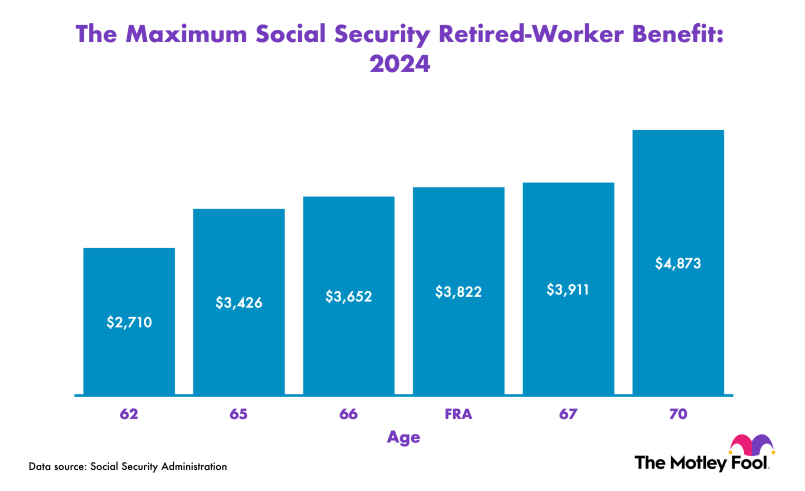
The optimal claiming age depends on multiple factors: your health and family longevity, financial need, whether you're still working, marital status, and other retirement income sources. The break-even point for delaying typically falls between ages 78 and 82-if you live past that age, delaying yields more total lifetime benefits.
However, claiming early might make sense if you need the income, have serious health conditions, or have sufficient other retirement resources that maximizing Social Security isn't crucial. Many financial advisors recommend that married couples coordinate their claiming strategies, often having the higher earner delay to maximize survivor benefits.
Spousal and Survivor Benefits
Social Security provides important benefits for spouses, even those who never worked or earned few credits. Spousal benefits allow your husband or wife to receive up to 50% of your full retirement benefit while you're both alive.
To qualify for spousal benefits, your spouse must be at least 62 years old (or any age if caring for your child under 16 or disabled), and you must have already filed for your own retirement benefits. If your spouse earned their own benefits, they'll receive the higher of either their own benefit or the spousal benefit-they can't collect both full amounts simultaneously.
The claiming age affects spousal benefits similarly to retirement benefits. Claiming spousal benefits before reaching FRA results in a permanently reduced amount. At FRA, a spouse receives 50% of your PIA; claiming at 62 typically reduces this to about 32.5%.

Survivor benefits often provide crucial financial protection for families. When a worker dies, their widow or widower can receive up to 100% of the deceased's benefit amount. This represents a significant safeguard, especially for couples where one spouse earned substantially more than the other.
Surviving spouses can claim reduced benefits as early as age 60 (or age 50 if disabled), though waiting until FRA yields the full amount. Importantly, survivors can switch between benefits: they might claim their own reduced retirement benefit early while letting their survivor benefit grow, then switch at FRA or later to maximize income.
Divorced individuals can also qualify for spousal and survivor benefits based on an ex-spouse's record if the marriage lasted at least 10 years, both are at least 62, and the person claiming benefits hasn't remarried (though remarriage rules differ for survivor benefits).
Disability Insurance
Social Security Disability Insurance (SSDI) provides monthly benefits to people who can't work due to severe medical conditions. The program has strict eligibility requirements-stricter than most private disability insurance or other government programs.
To qualify, you must have a medical condition that meets SSA's definition of disability: the inability to engage in substantial gainful activity due to a medically determinable physical or mental impairment expected to last at least 12 months or result in death. The SSA maintains a list of conditions that automatically qualify, but you can receive approval for other conditions if evidence shows you can't work.
You also need sufficient work credits, with recent work requirements. Generally, you need 40 credits with 20 earned in the last 10 years ending with the year you become disabled. Younger workers need fewer credits since they've had less time to accumulate them.

The application process is notoriously complex and lengthy. The SSA reviews your medical records, work history, and sometimes requires consultative examinations. Initial denial rates are high-about 65% of applications are denied initially-but many applicants succeed on appeal. The entire process from application to final decision can take months or even years.
If approved, there's typically a five-month waiting period before benefits begin. The benefit amount equals what you would receive as a retirement benefit based on your earnings record up to the point of disability. When you reach Full Retirement Age, disability benefits automatically convert to retirement benefits at the same payment level.
Taxation of Benefits
Many retirees are surprised to learn that Social Security benefits can be subject to federal income tax. Whether you owe taxes depends on your combined income, calculated as your adjusted gross income plus nontaxable interest plus half of your Social Security benefits.
For individuals, if combined income falls between $25,000 and $34,000, up to 50% of benefits may be taxable. If combined income exceeds $34,000, up to 85% may be taxable. For married couples filing jointly, these thresholds are $32,000 and $44,000 respectively. Note that these percentages refer to how much of your benefit is subject to taxation, not your tax rate.
Importantly, these thresholds have never been adjusted for inflation since their creation in 1983 and 1993, meaning an increasing percentage of beneficiaries owe taxes on benefits each year. At most, 85% of your Social Security benefit can be included in taxable income-never 100%.
Some states also tax Social Security benefits, though most don't. Currently, about 38 states plus Washington D.C. don't tax Social Security at all, while others provide exemptions for low-income recipients or tax benefits using the same rules as the federal government.
Retirees can request voluntary federal tax withholding from their Social Security benefits by submitting Form W-4V, choosing to have 7%, 10%, 12%, or 22% withheld. This prevents owing a large tax bill when filing annual returns. Alternatively, you might make quarterly estimated tax payments if you have substantial additional income.
Future of Social Security
Social Security's long-term financial challenges generate significant concern and political debate. According to the latest projections, the combined OASI and DI trust funds will be able to pay full benefits until approximately 2034. After that, incoming tax revenue would cover only about 80% of scheduled benefits if no changes are made.
This doesn't mean Social Security will "go bankrupt" or disappear. As long as people work and pay taxes, revenue will continue flowing in-just not enough to cover all promised benefits under current rules. The shortfall stems primarily from demographic changes: people living longer and the large Baby Boom generation retiring while relatively fewer workers support each beneficiary.
Various proposals aim to address the funding gap. Some suggest increasing the taxable maximum or eliminating it entirely so higher earners pay Social Security taxes on all income. Others propose gradually raising the Full Retirement Age, adjusting the cost-of-living formula, or increasing payroll tax rates. Some plans would reduce benefits for higher earners while protecting low-income recipients.

More controversial proposals include means-testing benefits (reducing or eliminating benefits for wealthy retirees) or partially privatizing the system through individual investment accounts. Each approach involves tradeoffs between financial stability, benefit adequacy, and fairness across generations and income levels.
For younger workers, prudent financial planning assumes Social Security will exist but potentially with modifications. Most experts believe benefits will continue in some form since the program is politically popular and serves as the foundation of retirement security for most Americans.
Maximizing Your Benefits
Strategic planning can significantly increase your lifetime Social Security benefits. The first step is ensuring your earnings record is accurate. Create a my Social Security account at ssa.gov to review your earnings history and projected benefits. Report any errors immediately, as correcting old mistakes becomes harder over time.
Working at least 35 years maximizes your benefit calculation by eliminating zeros from the formula. If you've already worked 35 years, continuing to work at higher earnings can replace earlier low-earning years, increasing your AIME and PIA. Even part-time work that generates modest income can help if it exceeds your earlier earnings.
For married couples, coordinate your claiming strategies. Often the optimal approach involves the lower-earning spouse claiming earlier while the higher earner delays to age 70. This maximizes the survivor benefit, which will be the higher of the two benefits after one spouse dies. Running claiming scenarios through calculators or consulting a financial advisor can reveal strategies worth tens of thousands of dollars.

If you claim early but continue working, be aware of the earnings test. Before reaching FRA, Social Security withholds $1 for every $2 you earn above $22,320 (2024 limit). In the year you reach FRA, they withhold $1 for every $3 above $59,520, until the month you reach FRA. These amounts aren't truly lost-benefits are recalculated at FRA to add back what was withheld-but the temporary reduction affects cash flow.
Consider tax planning in your claiming decision. Managing other retirement account withdrawals to minimize combined income can reduce taxes on Social Security benefits. Techniques like Roth conversions in early retirement years (before claiming Social Security) may create tax-free income that doesn't increase combined income later.
Finally, maintain good records of your work history, especially if you're self-employed, work for tips, or have periods of non-traditional employment. Your future benefits depend on properly reported earnings, making accurate tax filing an investment in your retirement security.
Frequently Asked Questions About How Social Security Really Works in America
Can I collect Social Security if I never worked?
You cannot collect retirement benefits based on your own work record without earning 40 work credits. However, you may qualify for spousal benefits if your husband or wife worked and earned benefits, or for Supplemental Security Income (SSI) if you meet income and resource limits and are elderly or disabled.
Will Social Security run out before I retire?
Social Security will not run out completely. Even if the trust funds are depleted around 2034, ongoing payroll taxes would still fund approximately 80% of scheduled benefits. Congress will likely implement changes before then to address the shortfall, such as adjusting taxes, benefits, or retirement ages.
Should I take Social Security at 62 or wait?
This depends on your health, financial need, life expectancy, and marital status. Claiming at 62 permanently reduces benefits by about 30% compared to Full Retirement Age, while waiting until 70 increases benefits by about 24%. If you expect to live past your early 80s and don't need the money immediately, delaying typically provides more lifetime income.
How much will Social Security replace my income?
Social Security replaces about 40% of pre-retirement income for average earners, with higher replacement rates for lower earners (up to 75%) and lower rates for high earners (as low as 27%). Most financial planners recommend having additional retirement savings since Social Security alone provides a modest standard of living.
Can I work while collecting Social Security?
Yes, but if you haven't reached Full Retirement Age, your benefits may be temporarily reduced if earnings exceed annual limits. In 2024, benefits are reduced $1 for every $2 earned above $22,320 (or $1 for every $3 in the year you reach FRA). After reaching FRA, you can earn unlimited income without any benefit reduction.
What happens to my Social Security when I die?
Your benefits stop, but eligible family members may receive survivor benefits, including widows/widowers (100% of your benefit), minor children, disabled adult children, and in some cases dependent parents. Surviving spouses can claim benefits as early as age 60, though waiting increases the monthly amount.
Do immigrants qualify for Social Security?
Legal immigrants who work in covered employment and earn sufficient credits qualify for Social Security benefits just like U.S.-born workers. You need a valid Social Security number and work authorization. Some immigrants may receive benefits while living abroad, depending on their country of residence and specific circumstances.
Is Social Security considered welfare?
No, Social Security is a social insurance program, not welfare. Workers earn benefits through payroll tax contributions during their careers. Benefits are an entitlement based on earnings history, not financial need. Supplemental Security Income (SSI) is the need-based program that functions more like traditional welfare.